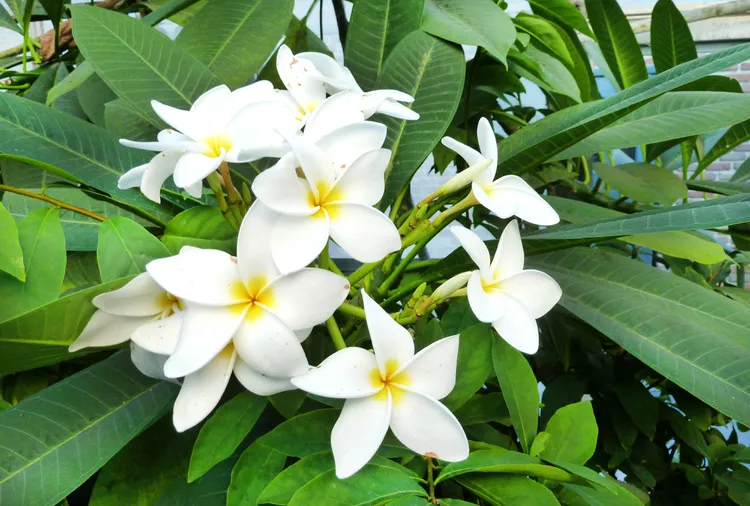
Plumeria, also called frangipani, is a tropical tree or shrub known for its fragrant flowers. The delicate, five-petaled scented flowers are used in Hawaiian leis. Many tropical trees, including plumerias, don’t grow well in most of the U.S. because they need a humid and hot climate year-round. Plumerias grow abundantly in Hawaii, the South Pacific, and Southeast Asia. They grow outside in USDA Zones 10-11, which includes Hawaii, some areas in Florida, and Southern California. Here’s what you need to know about growing this tropical tree.
Plumeria Overview
| Genus Name | Plumeria spp. |
| Common Name | Plumeria |
| Additional Common Names | Frangipani |
| Plant Type | Tree |
| Light | Sun |
| Height | 10 to 25 feet |
| Width | 8 to 25 feet |
| Flower Color | Orange, Pink, Red, White, Yellow |
| Foliage Color | Blue/Green |
| Season Features | Spring Bloom, Summer Bloom |
| Special Features | Attracts Birds, Fragrance, Low Maintenance |
| Zones | 10, 11 |
| Propagation | Stem Cuttings |
Where to Plant Plumeria
In USDA Zones 10–11, plant plumeria outside. Select an area with ample space for plumerias to grow tall and wide in a location that receives full sun. Don’t plant them next to a home or building; they spread up to 25 feet wide.
In most states, grow plumeria in containers that can be brought inside during the cold months and overwintered in an area that is at least 40°F. During this time, the plant goes dormant, and its leaves fall off. When the weather warms up in spring, relocate the plumeria outside.
All parts of plumeria are mildly toxic to humans and pets when ingested or touched, so make sure to keep the plant out of reach of curious children and companion animals.
How and When to Plant Plumeria
Plumerias can be planted in early spring, summer, or early fall. Select an area in full sun with well-draining soil (or amend the soil with compost). Dig a hole the same depth and slightly wider than the plant’s nursery container. Carefully remove the plumeria and settle it in the hole at the same depth it was in the container. Backfill the hole with soil and water deeply, pressing down lightly with your hands to remove any air pockets.
In areas of the U.S. that experience cold spells, frosts, or freezing temperatures, grow plumeria in large, well-draining containers that can be moved to a sheltered, warm location for the winter. Fill the container with equal parts potting soil and perlite.
Plumeria Care Tips
Plumerias are easy to grow when their basic requirements are met—plenty of sun, a hot and humid climate, and no exposure to frost or cold.
Light
Plumeria trees thrive in full sun, although they can handle partial shade. Place them in an area that receives at least six hours of sunlight daily.
Soil and Water
Plumeria trees enjoy rich, loamy soil, but they are adaptable and can manage most soil types as long as they are well-draining. The ideal soil pH is 6.5-7.0.
Most plants need around 1 inch of water a week, and plumeria is no exception. They typically need more than 1 inch of water when grown in full sun. Water deeply and allow the soil to dry before giving the plant another drink. Plumeria plants that stay outdoors during the dormant period in winter shouldn’t be watered. If you move them inside during their dormancy, check the soil for moisture every couple of weeks before watering them. Typically, they don’t need water while dormant, but it’s a good idea to check the soil occasionally; it shouldn’t be too dry or damp.
Temperature and Humidity
Plumerias grow in hot, humid regions and thrive in tropical climates. If you want to grow plumerias but live in an area with cold spells or freezing temperatures, you’ll need to grow your plumeria in a large pot so you can move it inside during the cold months.
Fertilizer
When a plumeria is established and growing in nutrient-rich, well-draining soil, fertilizer isn’t necessary. If you grow plumeria in a container, fertilize monthly with a high-phosphorus fertilizer.
Pruning
You don’t need to prune a plumeria. However, if you want to shape your plumeria or prefer to grow it as a tree with a main trunk instead of a dense shrub, pruning is beneficial. Be aware that flowers bloom at the branch tips. When the plant is cut back too much, blooms are scarce the following year.
Pests and Problems
When growing plumerias, you don’t have to worry much about pests. Sometimes, mealybugs, spider mites, or white flies might take up residence in a plumeria. Check the tree and look at the tops and undersides of the leaves to prevent or stop an infestation before it gets out of control. Insecticidal soap or neem oil is an effective method to tackle small or large infestations.
Occasionally, plumerias can be bothered by fungal diseases, including black tip fungus, leaf spot, and rust.
How to Propagate Plumeria
Plumeria is easy to propagate from stem cuttings in the spring.
- Select a light gray, mature bark stem and cut 12 to 18 inches from its tip using clean, sharp scissors or pruners held at a 45-degree angle.
- Remove most of the leaves from the cutting, keeping only a few at the top.
- Moisten the cut end and dip it in rooting hormone.
- Allow the cut end to callus. Keep the cutting at room temperature and out of direct sunlight for about a week. When the cut end is dry, it is callused.
- Place the cutting into a pot with well-draining soil, approximately 3-4 inches deep. Put it in a warm location but not in direct sunlight.
- Water deeply. Water again when the soil dries out. Too much water can cause the cutting to rot.
- The cutting will root within six to eight weeks, and you can transplant it to another container or directly into the landscape. Propagated plumerias take up to three years to produce blooms.
Types of Plumeria
White Plumeria
White plumeria (Plumeria alba) is a native of Puerto Rico. This plant has white blooms with yellow centers. When grown in its preferred conditions—lots of sunlight, tropical climate, and nutrient-rich soil—it can reach up to 25 feet tall.
Singapore Plumeria
Singapore plumeria (Plumeria obtusa) is covered in blooms from spring to fall. The 3-inch white flowers have yellow throats and rounded petals that contrast with the plant's shiny evergreen leaves. It typically grows 10 to 15 feet tall.
Bridal Bouquet Plumeria
Bridal bouquet plumeria (Plumeria pudica) is a very fast-growing tree that grows 10 to 15 feet tall. This variety continually produces large clusters of white blooms except for the winter season. The blooms contrast beautifully with the spoon-shaped, evergreen foliage.
Plumeria Companion Plants
The best plumeria companion plants also enjoy hot weather.
Purple Fountain Grass
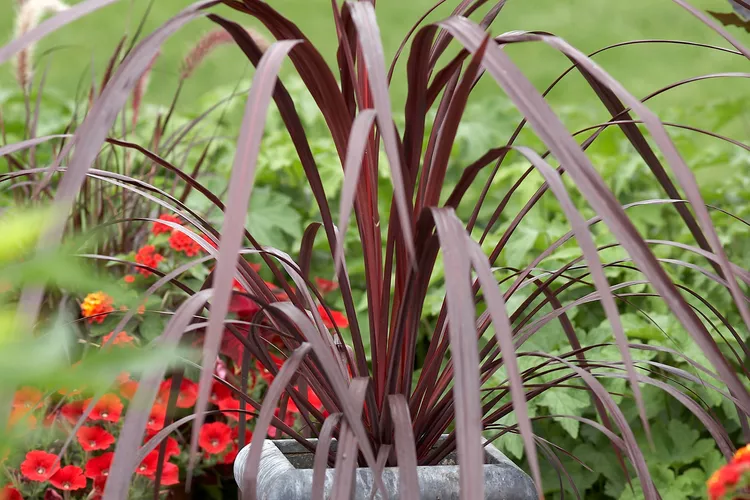
Purple fountain grass (Pennisetum setaceum ‘Rubrum’) thrives in hot, sunny spots, making it a good companion for plumeria. ‘Rubrum’ makes mounds of purplish-red leaves. Its erect red stems carry arching 1-foot-long pink to reddish-purple panicles of spikelets from midsummer through fall. It is usually grown as an annual, but it is a perennial in Zones 8–11.
Firestick Plant
Firestick plant (Euphorbia tirucalli ‘Rosea’), also called ‘Sticks on Fire,’ is a tropical variety of euphorbia. It has leafless green stems that turn yellow in summer and fiery shades of orange, pink, and red in winter, giving it the likeness of flames. The more sun the plant receives, the brighter the colors become. It is often grown as an annual, but it is a perennial plant in Zones 9-11.
New Zealand Flax
New Zealand flax (Phormium tenax) is a low-maintenance plant that has no trouble with heat. Known for its striking foliage, New Zealand flax grows in erect clumps and comes in several bold colors, including pinks, whites, reds, and burgundies. This plant grows as an annual or perennial in Zones 9-11.