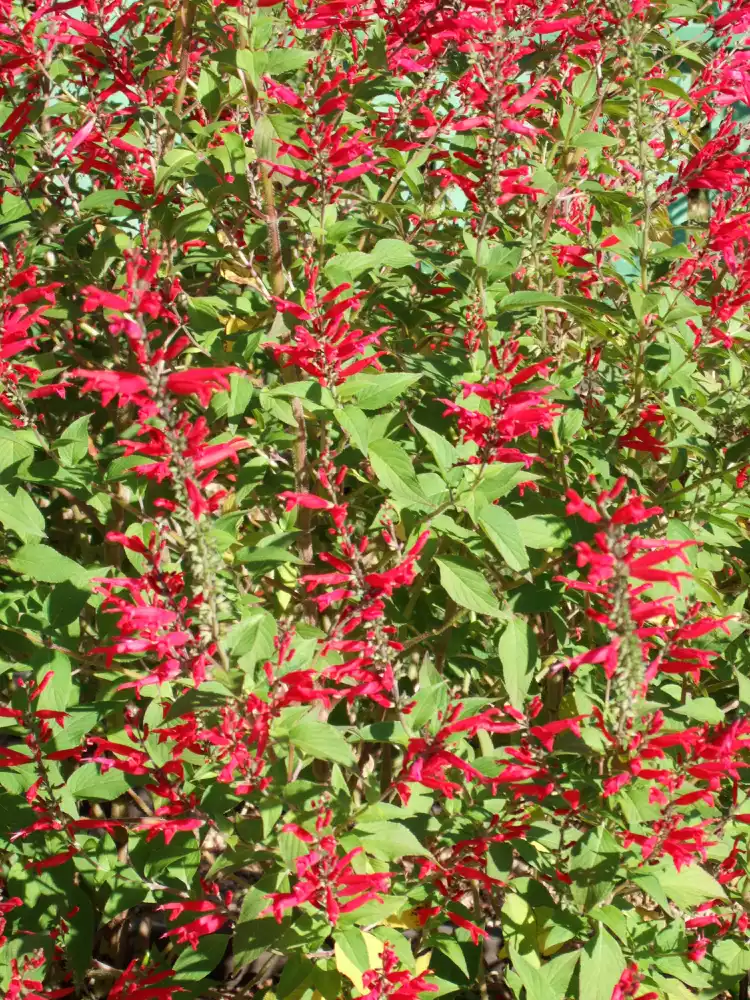
With vibrant color and an alluring, fruity scent, there is much to love about pineapple sage (Salvia elegans). While this plant is mainly known for its aromatic leaves that smell like pineapple when crushed, both the leaves and flowers are edible, and they can be used as garnishes or brewed into a refreshing herbal tea. Pineapple sage has showy, chartreuse green leaves and bright red flowers that are highly attractive to butterflies and hummingbirds. Whether you keep an ornamental, edible, or pollinator garden, save some space in your landscape for a pineapple sage plant or two.
Pineapple sage is a warm-weather-loving plant that’s native to Mexico and Guatemala. While this herb grows as a perennial in USDA Zones 8-11, it can be grown as an annual or overwintered indoors in pots in colder areas.
Pineapple Sage Overview
| Genus Name | Salvia |
| Common Name | Pineapple Sage |
| Additional Common Names | Hierba del Burro, Mirto, Mirto de Flor Roja |
| Plant Type | Herb, Shrub |
| Light | Part Sun, Sun |
| Height | 18 to 60 inches |
| Width | 2 to 3 feet |
| Flower Color | Red |
| Foliage Color | Blue/Green, Chartreuse/Gold |
| Zones | 10, 11, 8, 9 |
| Propagation | Seed, Stem Cuttings |
| Problem Solvers | Deer Resistant, Drought Tolerant |
Where to Plant Pineapple Sage
Pineapple sage can be planted in in-ground gardens or containers, but it needs lots of bright sun to grow properly. Ideally, a full sun location is best for this plant, although pineapple sage can tolerate some partial afternoon shade, especially in hotter climates. While pineapple sage can grow in a range of soil types, it doesn’t do well in soggy gardens, and should only be planted in a well-draining location.
Because of its versatility, pineapple sage is an excellent choice for herb gardens, pollinator gardens, and ornamental beds. Grow pineapple sage with other herbs or keep it near pollinator-friendly plants, like coneflower, borage, or calendula. Because pollinators love pineapple sage so much, it’s also an excellent companion plant to grow in vegetable gardens to increase pollinator activity and boost harvest yields.
How and When to Plant Pineapple Sage
Most often, pineapple sage is grown from nursery starts.
Plants grown from nursery starts should be planted outdoors in spring after the danger of frost has passed. When you’re ready to plant the pineapple sage in your garden, dig a hole about as deep as your plant’s pot and two to three times as wide. Locate your plant in the hole at the same depth it was growing in its nursery pot, and then backfill the hole with soil. For even better results, amend the soil prior to planting with compost or aged manure to give the sage plant an extra boost.
Pineapple sage can be planted on its own or in a grouping of multiple plants spaced 2–3 feet apart. Pineapple sage can also be grown in containers at least 12–14 inches in diameter, as long as the pots have plenty of drainage holes.
You can also grow pineapple sage transplants from seeds, but the seeds can be difficult to come by. If you can get your hands on seeds, start them indoors in seedling trays in early spring and set out the plants after all danger of frost has passed.
Pineapple Sage Care Tips
Pineapple sage is a late bloomer, but it’s worth the wait. This plant produces dramatic sprays of cardinal red flowers in late summer to autumn—just in time to provide pollen and sweet nectar to migrating pollinators. In warm climates, pineapple sage can flower throughout the winter months, while in cooler areas, it will bloom until a hard frost. If you’re new to keeping pineapple sage, the simple care tips below will keep your plant in tiptop form!
Light
Growing pineapple sage in a spot that receives at least 6–8 hours of bright sun daily will help you get lots of flowers. However, pineapple sage can also tolerate some light afternoon shade, particularly in the hottest weather. Considering that pineapple sage’s taste and aroma are influenced by climate and weather patterns, it’s important to provide this plant with the right balance of sun and shade.
Soil and Water
Like most plants, pineapple sage grows best in rich, well-draining soil with plenty of organic matter. Before planting, you may want to amend your garden with compost or aged manure to support the growth of the new sage plant and help it settle in faster.
While pineapple sage is relatively drought-tolerant once established, these plants grow best with consistently moist, but not soggy, soil. In dry climates, pineapple sage leaves can wilt or become crispy, but you can prevent this by watering the plant regularly with about 1 inch of water per week.
Temperature and Humidity
Pineapple sage grows as a perennial in Zones 8–11, but the plant will often die back to the ground after a hard frost. In these zones, cut down the pineapple sage and add a thick layer of mulch around the plant to shelter it against the worst of the winter weather. While pineapple sage can handle temperatures as low as 20°F, it should be overwintered indoors or kept as an annual in Zone 7 and colder. The plant grows well in average humidity of 40-50 percent.
Fertilizer
If you amend the soil with compost before planting pineapple sage, you often won’t need to add any extra fertilizer to your plant. However, if you want to improve its growth and bloom development, you can feed pineapple sage with a light application of a balanced, organic fertilizer during the growing season, following the instructions on the product packaging.
Pruning
Pruning pineapple sage is optional, but it does help improve the look of the plant and encourage it to produce new leaves. If you keep pineapple sage as an annual, simply pinch away some of the new growing tips of the plant, and it will grow back even fuller. When grown as perennials, pineapple sage can be pruned lightly in late winter to early spring by snipping away any overgrown or damaged branches with loppers or pruners.
Potting and Repotting Pineapple Sage
Pineapple sage is an excellent container plant. Choose a container 12-18 inches wide with drainage holes. Fill it with rich, well-draining soil and add pineapple sage transplants. Water it well and place it in a location that receives full sun. It will need to be watered more frequently than in-ground pineapple sage plants. Planting in a container makes it easier to move the plant indoors or to a sheltered area in Zones 7 or colder. Repotting won't be necessary when it is grown as an annual in containers outdoors. The plants will die, and the container can be replanted the following spring. In mild climates, where it grows as a perennial, repot it annually in a container 2-inches wider and filled with fresh potting medium
Harvesting
Both the leaves and flowers of pineapple sage are edible and can be harvested as soon as they reach a usable size. After harvesting, pineapple sage can be infused into cocktails or teas or used as a garnish or salad topper. Pineapple sage blooms also make fantastic cut flowers, and their bright color is sure to enliven any flower arrangement.
Pests and Problems
Pineapple sage has a rich scent that naturally repels many common pests, including deer. However, while this plant is naturally resistant to many common garden insects, there are a few exceptions: mealybugs and aphids.
Mealybugs are a variety of scale insect that feed on plant sap and can weaken plants over time. When they invade, mealybugs congregate on plant leaves and stems, and they look a bit like tiny, white balls of furry cotton. Organic insecticidal soap and neem oil sprays can work on these insects, but don’t apply these products to plants in flower; they can harm pollinators.
Like mealybugs, aphids also feed on plant sap, but they are a bit easier to treat. While insecticidal soaps and neem oil can work on aphids, often spraying aphids with a strong blast from your garden hose is just as effective.
How to Propagate Pineapple Sage
Pineapple sage can be propagated via seed or stem cuttings, although cuttings are recommended for cultivars.
Cuttings: In fall or spring, take 6-inch cuttings from new shoots with leaves rather than older stems with flower buds. Remove the leaves from the bottom half of the cutting. Pineapple sage is easy to root in water in a glass sitting on a sunny windowsill or in a potting medium. No rooting hormone is needed. After the plant roots, wait until the weather is warm to move it to the garden. Pineapple sage won't tolerate cold weather.
Seeds: After the pineapple sage plant flowers, wait for the seed pod to dry on the plant. Cut the stem holding the flower and seed pod and move it to a paper towel in a cool area to continue drying. Rub the seed pod between your fingers to release the seed. Store the seeds in an envelope in a dry area until you are ready to start them indoors in early spring in peat pots.
Types of Pineapple Sage
Careful plant breeding has developed several unique cultivars of pineapple sage. While there are other varieties of pineapple sage to choose from, some popular options include:
‘Honey Melon’
Salvia elegans ‘Honey Melon’ is a small variety of pineapple sage, but it blooms earlier in the season than many other cultivars. This makes it a great choice for anyone who lives in a cool climate but still wants to harvest lots of pineapple sage flowers before frost arrives. It is an excellent choice for growing indoors. It grows 2 feet tall and wide.
‘Tangerine’
Salvia elegans ‘Tangerine’ is another early bloomer… but with a twist. This easy-to-grow plant has darker flowers and a tangerine-like scent that’s truly unique! It spreads by runners into a dense clump. Cutting back old growth keeps this plant in flower for months. It grows to 18 inches tall and 24 inches wide.
'Golden Delicious'
Salvia elegans ‘Golden Delicious’ is grown primarily for its bright chartreuse-yellow leaves. It is an eye-catching addition to any garden bed or container. This is one pineapple sage cultivar that benefits from some afternoon shade; its spectacular foliage burns easily in full sun. It grows 3–4 feet tall and spreads to 3 feet.
Pineapple Sage Companion Plants
Pineapple sage pairs well with other pollinator-friendly plants.
Coneflower
Pollinators love these pretty North American native perennials, which have seen a resurgence in popularity. There’s a coneflower for every garden, including bright single flowers and double blossoms and colors from orange and yellow to red and deep pink. Coneflowers bloom from summer to fall, and they shine in a variety of garden settings.
Borage
Sparkling sky-blue blooms dance atop annual borage. It faithfully comes back from seed each year, quickly filling in empty spaces. As it ages, this annual develops a somewhat loose habit and may benefit from staking to remain upright in late summer.
Calendula
Calendulas, also called pot marigolds, are at home in a cottage or herb garden. Plant this easy-going annual in early spring to enjoy its flowers, which resemble daisies or chrysanthemums, until the heat of summer sets in. In regions with moderate summers, expect calendula varieties to bloom even more abundantly in fall. Add the edible blossoms to soups and salads as a colorful garnish.