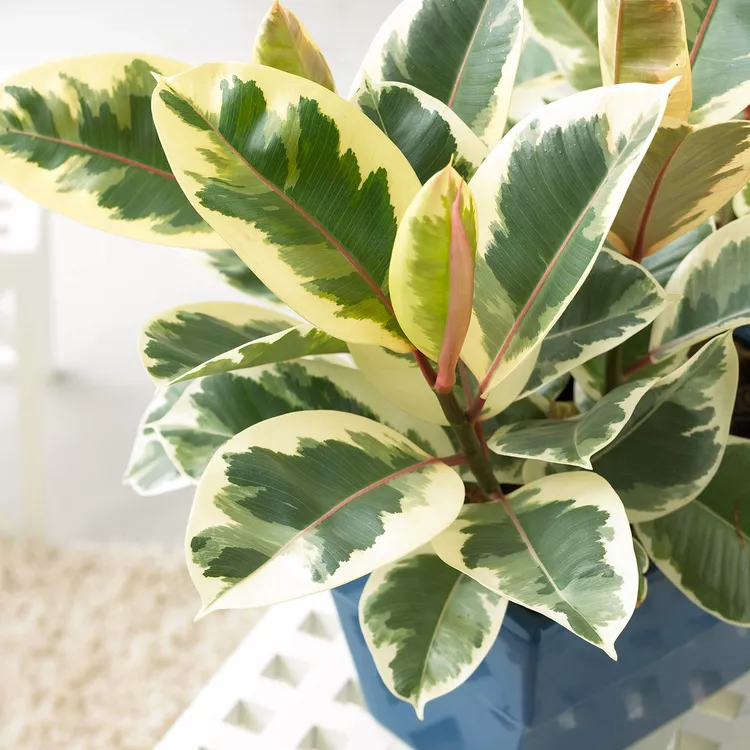
Rubber plants (Ficus elastica) are popular houseplants, beloved for leaves so shiny they look lacquered. Perhaps that's why rubber plant leaves falling off the stems can cause concern, especially when it's several at a time. So what should you do when your plant begins dropping those gorgeous glossy leaves? First of all, take a few breaths. Then check out what a house plant pro has to say about it.
Paris Lalicata is a plant education expert for the online plant seller The Sill.
Causes of Rubber Plant Leaves Falling Off
Rubber plants have their quirks. They’re easy to grow if you give them the right conditions, but when they don’t get the right conditions, they get stressed, and their leaves can fall off, says Paris Lalicata, plant education expert for the online plant seller The Sill.
“While occasional leaf drop can be normal as plants shed their older leaves, there may be other issues going on if your rubber plant is excessively dropping leaves,” Lalicata adds.
Here are some possible causes of a rubber plant's leaves falling off.
1. Low Light or Light Change
Rubber plants that don’t get enough light will drop their lower leaves, Lalicata says. She points out that they’re also "sensitive to sudden changes in light.” For example, if you move the plant from a sunny room to a not-so-sunny room, it may respond by losing leaves. Bringing a rubber plant indoors for the winter after it spent a summer outdoors might cause some leaves to fall off, too.
2. Overwatering or Underwatering
“There is a chance the leaf drop could be related to overwatering or underwatering. Give a rubber tree too much water, and its leaves will fall off. Let it get too dry between waterings, and that can make the leaves fall off, too,” Lalicata says.
3. Pests
Rubber plants are vulnerable to the usual suspects that plague houseplants: scale, aphids, mealybugs, thrips, and spider mites. An infestation of any of these pests can weaken the plant and make it drop its leaves.
4. Drafts and Dryness
Like many houseplants, rubber plants hail from a tropical climate and love warm, humid conditions. They don’t do well in the cool, dry indoor air of winter. If your rubber plant is exposed to a cold draft, its leaves will turn yellow, then brown, and fall off. The same will happen if the plant doesn’t get enough humidity.
Prevention and Treatment
Once your rubber plant leaves are falling off, give it TLC immediately. “To prevent future leaf drop you’ll need to optimize the environment or your care routine to give the plant what it needs to be healthier,“ Lalicata says. Here’s what she recommends.
Proper Watering Techniques
Water a rubber tree once every week or two. Let the soil dry out between waterings. “But don’t let it remain dry for too long, or it could contribute to leaf loss,” Lalicata says.
In spring and summer (the peak growing season for a rubber plant) increase the watering frequency. In the fall and winter, when the rubber plant receives less light and grows more slowly, reduce the frequency.
Check the top 1 inch of soil in the pot. When it is dry to the touch, water the plant.
Pest Prevention Tips
“Pests come with the territory when you own plants,” Lalicata says. “Act preventively to keep them away.” She recommends cleaning the leaves of your plant weekly with a damp cloth or duster and inspecting leaves and stems for pests or pest damage. When you spot pests, treat the plant with neem oil spray and separate it from other plants to prevent a wider infestation.
Another way to prevent pests is to put out sticky traps that catch plant pests like aphids, fungus gnats, whiteflies, thrips, and other winged menaces before they infest your indoor plants.
The best way to keep pests from your rubber plants is to make sure the plants are strong and healthy. Pests attack plants that are under stress due to poor nutrition, insufficient light, or incorrect watering.
PARIS LALICATA
“Make sure the plant is getting the right environmental conditions and nutrition, and pests are more likely to stay away.”
Getting Rid of Pests
If you find pests on your plants, you have two options to eradicate them.
NONCHEMICAL METHODS:
- Wash the bugs off the plant by placing the entire plant in the shower or a sink (think a hose sprayer attachment on a sink faucet).
- Physically remove pests by picking them off leaves or using a damp cloth to wipe them off. A cotton swab dipped in rubbing alcohol helps remove mealybugs and spider mites.
- Prune off infested stems or branches. Toss the buggy plant parts into the trash.
CHEMICAL METHODS:
For a major infestation, look for one of these pesticides labeled for indoor plants.
- Pyrethrin requires repeat applications and must be applied directly to the insects to kill them.
- Insecticidal soap kills insects by smothering them. You must apply directly to the insects and do repeat applications until the pests are all gone.
Light Requirements
Rubber trees need bright, indirect light to thrive. If the plant is leggy or its leaves have gotten pale and dull instead of green and glossy and begun to fall off, the plant may need more light.
“If you think the leaf drop is due to low light, move the plant closer to a window or incorporate a grow light,” Lalicata says. She suggests placing the plant by a southern-facing window so it can get six to eight hours of bright light daily.
Temperature and Humidity
Rubber trees do best in moderate temperatures, 60°F to 75°F degrees, with 40% to 50% humidity. If leaves are falling off, check the air temperature with a thermometer and the humidity with a hygrometer.
If you decide a draft is causing the leaf drop, “move the plant to a stable environment where it will get consistent temperatures,” Lalicata says. If dry air is an issue, put a humidifier near your plants, mist leaves with water several times a day, or place the plant in a dish of pebbles filled with water. The water in the dish evaporates into the air, increasing the humidity near your plant. The pebbles in the dish prevent your plant’s roots from standing in water and getting too wet. Just make sure water level stays below the top of the pebbles.
Provide your rubber tree with the right growing conditions to keep its lovely leaves on the plant. Give it bright light, moderate but consistent moisture, and stay vigilant for pests. You’ll be rewarded with a healthy, vibrant rubber plant with leaves that stay put.