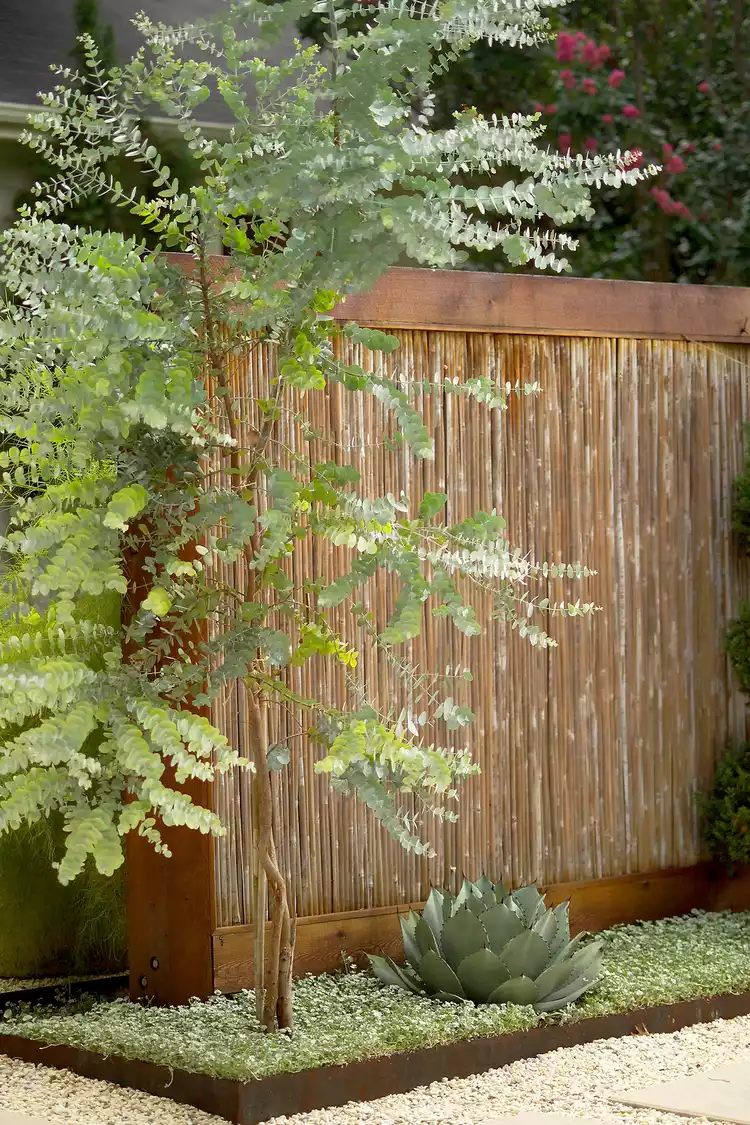
Known for its menthol-like scent and as a filler in cut flower arrangements, eucalyptus plants can also be grown as container plants and showy annuals. These tough trees, hardy in Zones 7-10, have over 700 species available, and most are native to Australia. Although some of these plants can reach over 200 feet tall, they can be used seasonally in many gardens and even as a houseplant.
Eucalyptus is grown for its potent essential oils, commonly derived from the E. globulus. These fragrant oils are used to scent perfumes and fragrances. All parts of the eucalyptus plant produce these oils, but they are most commonly derived through steam distillation of the leaves.
Eucalyptus bark, leaves, and oil are considered highly toxic to both humans and most animals. In fact, koala bears—who dine almost exclusively on eucalyptus leaves—can only tolerate the leaves because of the unique microbes in their digestive tract that break down the otherwise harmful compounds. Skin contact with the leaves or oil of the plant may cause minor contact dermatitis in some people.
Eucalyptus Overview
| Genus Name | Eucalyptus |
| Common Name | Eucalyptus |
| Plant Type | Houseplant, Tree |
| Light | Sun |
| Height | 6 to 200 feet |
| Width | 2 to 20 feet |
| Flower Color | Pink, Red, White |
| Foliage Color | Blue/Green |
| Season Features | Summer Bloom, Winter Interest |
| Special Features | Attracts Birds, Cut Flowers, Fragrance, Good for Containers |
| Zones | 10, 8, 9 |
| Propagation | Seed, Stem Cuttings |
| Problem Solvers | Good For Privacy, Slope/Erosion Control |
Where to Plant Eucalyptus
Plant eucalyptus where it will get full sun and have consistent and adequate drainage. Make sure there's plenty of room around it so it can grow big and wide.
If you're planting eucalyptus in an area where they're hardy, they may exhibit allelopathic effects on some plants. That's when a plant releases toxins into the soil so competing plants can't grow. There is still some uncertainty about the level of allelopathy that eucalyptus trees have, but it's something to consider when planting.
The cider gum (E. gunnii), silver dollar (E. cinerea), and Alpine cider gum (E. archeri) are particularly suited for growing indoors in containers. Choose an area of your home with a south-facing window so the plant can get plenty of sunlight.
Some eucalyptus trees and shrubs are considered invasive in some regions—particularly the coastal regions of California and the islands of Hawaii. The California Invasive Plant Council (CAL-IPC) classifies common blue gum eucalyptus as moderately invasive and does not recommend planting them for this reason and because the trees are highly flammable and could exacerbate wildfire damage. The Hawaiian Ecosystems at Risk (HEAR) project Biological Resources Division classifies E. globulus and E. robusta as invasive for their allelopathic tendencies.
How and When to Plant Eucalyptus
Eucalyptus should be planted later in the spring or in the fall, depending on your USDA Zone. Dig a hole that's a bit larger than the tree's root ball, and—if you are planting more than one eucalyptus plant—space them about 8 to 10 feet apart to give them plenty of space to grow. If you plan to grow your eucalyptus plants as annual shrubs, they will need slightly less space as they are likely to only reach 6 to 8 feet in height. Water the tree both before you transplant it to the ground and after it's planted.
Eucalyptus Care Tips
Eucalyptus are fast-growing plants that can be challenging to grow outside their natural habitat.
Light
Eucalyptus needs full sun, which helps plants grow sturdy and promotes better branching, brighter silver foliage, and higher oil content.
Soil and Water
Eucalyptus likes well-drained, consistently-moist soils that are slightly acidic with a pH of 5.5 to 6.5. If you're planting one as a tree, be aware these are thirsty plants. Water at least once a week if potted, and check that soil is dry before watering outdoors.
When growing eucalyptus indoors, use any general-purpose well-draining potting media and make sure the container you use has ample drainage.
Temperature and Humidity
Eucalyptus do well in moderate temperatures, between 65ºF and 75ºF. If the temperatures dip below 50ºF, they suffer, so if you're growing them in pots, bring them indoors if they're outside. A bit of humidity is good for eucalyptus plants.
Fertilizer
Use a low-nitrogen fertilizer, following manufacturer's instructions, for indoor eucalyptus plants or outdoor plants in containers. Trees and plants in your yard won't need fertilizer.
Pruning
There are several methods for pruning eucalyptus depending on your needs and which species you are growing.
One method—coppicing—involves cutting the tree or shrub back to almost ground level occasionally to stimulate growth. This method, which is particularly effective for E. gunnii and E. globulus cultivars, keeps the foliage in the juvenile stage, encourages new stems each year, and helps manage the size of the plant. To coppice your eucalyptus, cut back all the stems (to about 6 to 12 inches from the ground) using angled cuts in late winter or early spring. In the early stages, it may take more than one season for new growth to return, but after years of regular coppicing, vibrant new growth should return each season. The cuttings from coppiced eucalyptus plants are excellent for drying or using in floral arrangements.
If you are pruning your eucalyptus to form a shrub or hedge, cut back about one-third of the plant’s height at the end of its second growing season. After each subsequent growing season, you will only need to remove about a quarter of the plant’s height to maintain a reasonable size and shape.
If you are growing eucalyptus as a tree, it won’t need much pruning beyond the occasional removal of dead leaves and branches. You can, however, begin pruning some of the lower branches (after the tree is at least 2 years old) if you would like to create a more defined canopy when the tree reaches maturity. You can also cut eucalyptus branches from your tree to use in floral arrangements or for their aromatic properties.
For potted eucalyptus, you can snip off unruly or overgrown ends as necessary, but avoid doing any major pruning until spring. Come spring, you can prune your plant to direct its shape and remove any dead or broken branches.
Potting and Repotting Eucalyptus
Eucalyptus are fast growers; their roots can quickly fill a small container. Their roots are quite sensitive, so it's best to start with a larger pot to avoid the need to transplant them later on. If you're growing eucalyptus as a houseplant, or overwintering one, give it as much sun as possible in the home. Usually, a bright southern exposure will work best.
Pests and Problems
The longhorned borer beetle attacks eucalyptus in California. They create holes in the bark where liquid will ooze out. Unfortunately, there's no effective pesticide for these pests, so tree management is essential to keep these insects from damaging trees. Otherwise, there are few pests or problems that can harm eucalyptus trees.
How to Propagate Eucalyptus
Propagation can be done with cuttings taken during late summer from trees between two and 12 months after planting. Cut a 5-inch branch and dip it in rooting hormone. Add the branch to a pot with growing medium. Set the pot in indirect sunlight to keep the plant at around 70ºF. In about a month, roots should form.
Planting eucalyptus from garden plants or seeds is the easiest way to grow them, but many species of eucalyptus seeds must be stratified in the refrigerator for at least two months before planting. This will simulate winter and promote germination. Toss the seeds in a plastic bag with some vermiculite, perlite, or sand and spritz the contents to moisten the mix. Date the bag and place it in the refrigerator for 6 to 8 weeks. When you are ready to plant—preferably two months before the last frost, fill a container (if growing indoors), starting tray, or growing pot with a well-draining potting mix and place the seeds on top, lightly covering them with soil. Place the container in a warm place with lots of indirect light and spritz the seeds daily as they germinate (which may take 3 to 4 weeks).
Types of Eucalyptus
Dwarf Blue Gum
Eucalyptus globulus 'Compacta' is a fast-growing tree that usually remains less than 30 feet tall, but it's easy to keep trimmed to 10 feet tall. Dwarf blue gum bears creamy-white flowers in winter, followed by bluish seed capsules in summer that drop from the tree, making this somewhat of a nuisance tree. Zones 9-11
Lemon-Scented Gum
Eucalyptus citriodora is a large tree that grows 75-100 feet tall and spreads 25-50 feet wide. Lemon-scented gum bears small white flowers in winter. Some experts have reclassified this tree as Corymbia citriodora. Zones 9-11
Rainbow Gum
Eucalyptus deglupta gets its name from its multicolor bark. The tree sheds patches of bark irregularly to reveal green inner bark, which darkens with age to blue, purple, maroon, and orange. Also known as Mindanoa or Indonesian gum, it's a large tree, growing up to 200 feet tall and 40 feet wide. Zones 10-11
Red Flowering Gum
Eucalyptus ficifolia is one of the showiest eucalyptus trees. It bears clusters of red, orange, pink, or white flowers above the tree canopy sporadically throughout the year. The tree grows 25 to 40 feet tall and wide. Botanists have reclassified it as Corymbia ficifolia, but you'll often find it sold by its traditional name. Zones 10-11
Red Ironbark
Eucalyptus sideroxylon is called red ironbark because mature trees develop deeply furrowed reddish-brown bark. This tree may grow upright to 80 feet tall or be weeping in form and remain below 20 feet tall. The width ranges from 20 to 45 feet. Leaves on juvenile plants are bluish-white and lancelike in shape. Mature trees produce sickle-shaped leaves that turn bronze in winter. Flower color varies from pinkish-white to red. Zones 9-11
Silver Dollar Gum
Eucalyptus cinerea is a small tree that grows up to 30 feet tall and 10 to 15 feet wide. The silvery leaves are round and gray-green, giving rise to the tree's common name. As the plant ages, leaves become more oval and elongated. Cut stems are often used in floral arrangements. Zones 8-11
'Silver Drop' Eucalyptus
Eucalyptus gunnii 'Silver Drop' is most commonly grown as an annual for its fragrant silver-green foliage. It grows 2 to 3 feet tall and wide. Zones 8-11
Spotted Eucalyptus
Eucalyptus maculata is also sometimes classified as Corymbia maculata. It gets its common name from its irregular bark coloration. The bark sheds in flakes, leaving spots of white, gray, green, and pink. The tree bears white flowers in summer. In cultivation, it reaches 60 feet tall and 30 feet wide. Zones 9-11
Sydney Blue Gum
Eucalyptus saligna is a fast-growing large tree that may reach 180 feet tall, but in cultivation it typically tops out at 50 to 60 feet tall and 25 feet wide. From late spring through summer it bears pink to white flowers, which attract birds. Zones 9-11