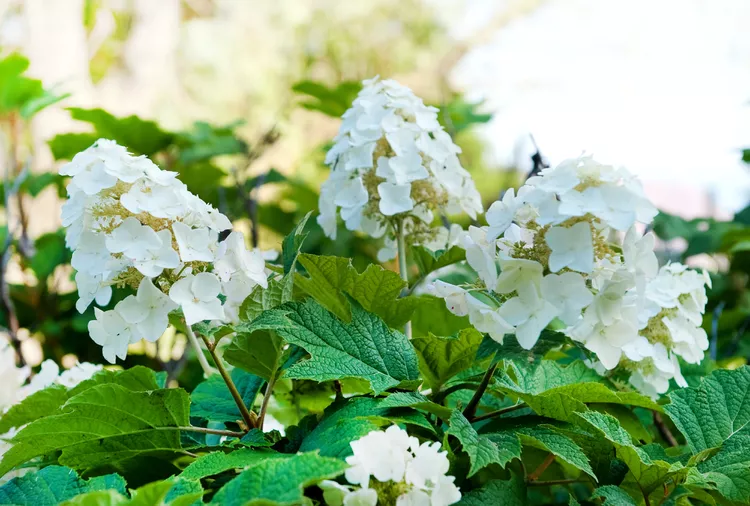
Oakleaf hydrangea is a midsized to large deciduous shrub that's native to the woodlands of the American Southeast and is hardy throughout most of the country. Its large, cone-shaped flower heads start out white and fade to colors including pale pink, beige, and ruby as the growing season progresses. The flowers often persist on the stems into winter and make excellent dried pieces for seasonal arrangements.
This type of hydrangea's large, coarsely textured leaves resemble the leaves of oak trees, hence the common name. The green leaves develop fall colors ranging from orange to red to purple at the start of autumn. Mature stems have attractive peeling bark that resembles cinnamon sticks. Here's how to plant and grow an oakleaf hydrangea in your garden.
Oakleaf Hydrangea Overview
| Genus Name | Hydrangea quercifolia |
| Common Name | Oakleaf Hydrangea |
| Plant Type | Shrub |
| Light | Part Sun, Shade, Sun |
| Height | 4 to 8 feet |
| Width | 4 to 8 feet |
| Flower Color | Pink, Red, White |
| Foliage Color | Blue/Green |
| Season Features | Colorful Fall Foliage, Fall Bloom, Summer Bloom, Winter Interest |
| Special Features | Cut Flowers, Low Maintenance |
| Zones | 5, 6, 7, 8, 9 |
| Propagation | Stem Cuttings |
| Problem Solvers | Drought Tolerant |
Where to Plant Oakleaf Hydrangea
Oakleaf hydrangeas look beautiful as part of a mixed shrub border where their large leaves, color-shifting flowers, fall foliage color, and exfoliating bark contrast with neighboring shrubs, particularly evergreens. Large specimens can be showstoppers during spring through fall but may be less impressive in winter with nothing to contrast against the bare, albeit beautiful stems.
These shrubs vary in mature size. Site your plant based on the size at maturity, and allow appropriate space from other plants to ensure it can reach its full potential.
Avoid direct midday sun. In cool regions (Zone 5), extreme winter temperatures may decimate the flower buds and kill the stems back to the ground. Planting in an area with protection from winter winds may help remedy this concern.
All parts of hydrangeas contain cyanogenic glycosides, which are toxic to humans and animals. Make sure to plant hydrangeas where they will not pose a threat to pets and small children.
How and When to Plant Oakleaf Hydrangea
The best time to plant oakleaf hydrangea is in summer or fall. Avoid planting in the most extreme heat of summer if possible. Dig the hole no deeper than the root ball of the plant. It is better to install the plant too high rather than too low. Loosen the surrounding soil to accommodate for root growth and help water filter down to the roots, and then tamp the soil back around the plant. Water deeply, at least twice a week until established, and more frequently in warm weather. Apply a layer of mulch to cool and protect the roots of the plant and to retain moisture.
Oakleaf Hydrangea Care Tips
Oakleaf hydrangea is an easy-to-grow shrub in average-to-fertile, moist soil. It grows best in partial shade, limiting the intense midday sun. Established plants are very drought tolerant.
Light
Oakleaf hydrangeas perform best in partial shade. Plants in deep shade can become leggy with reduced flowering, while plants grown in too much sun may develop leaf scorch in the peak of summer. Ask your local nursery about the best light conditions for oakleaf hydrangea in your region.
Soil and Water
Organically rich, moist soil will help oakleaf hydrangeas thrive, but these shrubs are actually very drought-tolerant once established. Water when the top 2-4 inches of soil is dry. Limit watering the leaves (overhead watering) to reduce the likelihood of foliar diseases. Excessively moist soil for prolonged periods can lead to root rot. Established plants in many parts of the country may need little or no supplemental water throughout the season.
Apply 2 inches of mulch around the plant to protect the delicate roots from drying out. Avoid letting mulch touch the stem of the shrub. As with all woody plants, this can lead to stem rot.
Temperature and Humidity
Oakleaf hydrangeas are hardy throughout most of the United States, although they will not survive in the northern and southern extremities of the country. When grown in the coldest regions of its hardiness range, the shrub may die back to the ground in winter, eliminating the potential for flowering the following season. In these regions, it's best to consider oakleaf hydrangea as a unique foliage plant with excellent fall color.
This plant is native to the American Southwest, and the best flowering often occurs in regions with warmer temperatures. Excessive humidity may cause the plant to develop powdery mildew or other foliar diseases.
Fertilizer
Oakleaf hydrangea needs fertile soil to thrive. Plants grown in the proper location will require little or no additional fertilizer. If you choose to fertilize, use a balanced slow-release fertilizer such as 10-10-10 or 20-20-20, and apply it evenly at the base of the plant in late spring or early summer when it is actively growing.
Plants grown in sandy or nutrient-deficient soil will benefit from a yearly application of compost around the base of the plant. Apply the compost to the soil under the plant and cover it with mulch. Avoid working the compost into the soil to limit root disturbance.
Pruning
Oakleaf hydrangeas look best with minimal pruning. This is not a formal shrub nor a candidate for aggressive shaping or shearing. If you do not appreciate the look of the dried flowers remaining on the plant for the balance of the season, remove them shortly after flowering. Oakleaf hydrangeas develop the next season's flower buds in late summer. Pruning late in the season will reduce next year's flower display.
If your plant has become too large for the space, remove several large stems to promote new growth lower to the ground. Consider, however, that one of the more charming aspects of this plant is the winter interest provided by the cinnamon-colored exfoliating bark.
Oakleaf hydrangeas may develop irregular growth, particularly in heavy shade. Think of this as an asset rather than something to struggle against. Enjoy the natural beauty of this plant.
Potting and Repotting Oakleaf Hydrangea
Oakleaf hydrangeas struggle when grown in pots, which can be a problem for nursery growers. Smaller selections can be used in large planters, although these shrubs are best grown directly in the ground.
Pests and Problems
Oakleaf hydrangeas may develop powdery mildew late in the season, particularly in humid regions. This plant is often grown in partially shaded and protected locations with poor airflow. Monitor your plants for powdery mildew and prune back surrounding plants to increase air circulation as needed.
Another common problem is bacterial leaf spot. This disease presents itself as reddish-brown spots on the surface of the leaves. Minor infestations are unsightly but not deadly. Bad cases will cause the hydrangea to shed its leaves, weakening the plant. Prune out heavily infected sections of the plant and rake up and remove all fallen leaves from the ground. Disinfect your tools before using them on any other plants. Avoid overhead watering and provide good airflow around the plant to limit the formation and spread of the disease. Pesticides containing copper sulfate or copper octanoate may be effective at controlling leaf spot. Carefully read the label and apply as directed.
Oakleaf hydrangeas are also susceptible to root rot. Ensure your site has good drainage, and only water mature plants once the top 3-4 inches of soil is dry.
How to Propagate Oakleaf Hydrangea
Softwood cuttings taken in spring or early summer may root in 4-6 weeks but can take as long as 12 weeks. Here's how to do it.
- Take 2- to 4-inch stem tip cuttings and remove half of the leaves to reduce moisture loss.
- Apply a rooting hormone, and place the cutting in a sterile potting mix.
- Place the unrooted cuttings under a mist system, or cover them with a clear plastic container.
- Mist the plant at least once daily until roots form.
Types of Oakleaf Hydrangea
‘Alice’ Oakleaf Hydrangea
Hydrangea quercifolia ‘Alice’ produces white flowers on 14-inch inflorescences, which eventually turn pink and finally beige just before the foliage matures to a deep purple and burgundy color for autumn. Although labeled to reach 8 feet tall and 8 feet wide, in time, a mature specimen may become even larger.
‘Snow Queen’ Oakleaf Hydrangea
Hydrangea quercifolia ‘Snow Queen’ reaches 6 feet tall and wide, with bronzy red autumn leaf color and 8-inch inflorescences of white flowers that turn pink as they age.
‘Munchkin’ Oakleaf Hydrangea
Hydrangea quercifolia ‘Munchkin’ was introduced by the U.S. National Arboretum. This diminutive form reaches only 4 feet tall and wide, with white flowers that age to a pleasant medium pink. This petite form works well in smaller yards where traditional selections may overpower the space.
‘Ruby Slippers’ Oakleaf Hydrangea
Hydrangea quercifolia ‘Ruby Slippers’ is a compact form that reaches 4 feet tall and 5 feet wide as it ages. The inflorescences are large for such a small plant, growing up to 9 inches long, and are covered in white flowers that quickly turn pink, and then mature to a saturated ruby color.
Oakleaf Hydrangea Companion Plants
Gold Dust Plant
The evergreen leaves of the gold dust plant (Aucuba japonica) provide a pleasant contrast to the leaves of oakleaf hydrangea, particularly late in the season when the hydrangeas develop rich fall colors reminiscent of east-coast deciduous forests. Zones 6-10
Hellebore
Hellebores (Helleborus spp.) provide a deep green skirt when planted at the base of oakleaf hydrangeas. The flush of leaves and flowers in winter provides additional interest and contrast to the bare, exfoliating stems that oakleaf hydrangeas are known for. Zones 4-9
Witch Hazel
Witch hazels (Hamamelis spp.) are excellent plants for the mixed shrub border, a common location for oakleaf hydrangeas. The yellow and gold fall color accompanies the rich reds, purples, and oranges of oakleaf hydrangeas. Be aware of the size of your witch hazels, and allow it space to mature into a balanced specimen. Zones 3-8
What to Avoid Planting with Oakleaf Hydrangea
Not all plants are going to pair well with oakleaf hydrangeas. Avoid growing plants like sunflowers, lavender, and rosemary near these shrubs because they require much hotter, dryer conditions to thrive. For your best results, you should also avoid planting this shrub beside large trees which will compete with oakleaf hydrangeas for water and nutrients.