
Putting a little effort into the landscaping around your home can have several financial benefits. A well-kept, colorful landscape often increases your property's value and curb appeal, and planting trees in the right places can reduce your heating and cooling costs. Plus, gardening and enjoying the outdoors can improve your well-being, reducing health costs. However, beautifying and maintaining your yard can quickly become costly when you add up all the plants, tools, and other materials. These budget-friendly landscaping tricks will help you avoid unnecessary costs and spend your gardening dollars more smartly.
Do Your Research
Horticulturists at local universities often offer free advice to save you from making costly mistakes, such as putting shade-loving plants in full sun. Also, visit your local library to check out gardening videos, books, and magazines (side bonus: some libraries even offer seeds and lend garden tools). And, of course, websites like this offer plenty of how-to landscaping and gardening information.
Comparison Shop
Know which plants you want before you head to the nursery or garden center. Visit two or three retailers to check their offerings; nurseries can differ drastically in price and quality. You may find great deals from online garden centers, too. Plus, avoiding impulse buys will help you to focus your budget on plants you really want. If you're not sure about something, don't buy it.
Shop Cooperatively
Buying bulk is less expensive if you share the costs with gardening friends or neighbors. For example, a bulk order of mulch shared between a couple of yards will cost much less than buying bagged mulch for just one yard. And going in together on renting equipment such as tillers and lawn aerators keeps everyone's total costs down.
Rely on Used or Upcycled Tools and Equipment
New isn't always better. For example, you can often find great deals on gently used tools, pots, outdoor furniture, and garden supplies at garage and estate sales. Or you can repurpose all sorts of common household items for your landscaping needs.
Don't Overplant
Landscape with mature sizes in mind, or you may end up paying to move crowded plants.
Collect Inspiration
A less expensive alternative to hiring a professional landscape designer is to clip pictures you like from gardening magazines, books, and websites to get ideas before you start a new garden bed or landscaping project. Check out our Pinterest boards of garden inspiration.
Editor's Tip: Visit botanical gardens and other public display gardens to take your own photos of the plants and garden styles you like.
Test Your Soil
A simple soil test can pinpoint the nutrients your soil lacks and the type of soil you have to avoid wasting money on unneeded additives or a plant that will not survive in your soil conditions. In addition, most soil test results include recommendations for exactly what to add to achieve optimal soil fertility.
Control Weeks While They're Young
Weeds compete with your plants for water and nutrients. Many weeds are much easier to remove by hand when they are young and small, and before they get a chance to multiply to the point where you may need to resort to purchasing a weed killer to effectively deal with the problem.
Make Your Own Compost
Turn garden and kitchen waste into valuable organic matter by composting it. The resulting compost will add nutrients while improving your soil's tilth, aeration, and water-holding capacity. If you don't want to buy a compost bin, you can create a DIY compost bin from inexpensive materials such as discarded fencing or trash cans.
Feed Your Lawn Sensibly
Cool-season lawns do fine when fertilized only a few times a year, particularly in early September, late October, and mid-April. Don't fertilize in summer. Warm-season lawns can use a couple of feedings in summer but don't require it in fall or winter. It's better to under-fertilize than overdo it, too.
Leave Grass Clippings
Don't bag your grass clippings unless your lawn is especially prone to thatch. They'll quickly break down, adding organic matter and nutrients to your lawn, so you don't have to use as much fertilizer.
Start Your Lawn From Seed
While it takes longer to get established, you can save a considerable amount of money using the landscaping trick of planting grass seed instead of sod. Or if instant curb appeal is needed, lay sod just in the front yard and seed the back. And whether you seed or sod, make sure to do so at the best times of year for your region and grass type, or you may have to spend more money to redo the project.
Don't Cut Your Lawn Too Short
Most lawns do best if allowed to grow 2 or 2-1/2 inches tall between each mowing. The higher you let your grass grow, the deeper its root system is, so you don't have to water as often. Tall grass shades out weeds better, too.
Save Seeds
Many common flower and vegetable seeds stay viable for several years if stored properly. So if you don't use them all one year, you can plant the rest of a packet the next year. The best way to store your seeds is in a cool, dry place. You can also save seeds from many plants in your garden to grow again next year, such as marigold, tomato, and basil.
Mix in Annuals
Perennials are an expensive investment, so ease up on your pocketbook by purchasing some seed packets of your favorite annuals.
Editor's Tip: Self-seeding annuals such as cleome, bachelor's button, and California poppy often return year after year from the previous season's seeds, so you don't have to buy them every year.
Divide Your Perennials
Of the perennials you do buy, make more of them by dividing clump-forming plants after two or three years. "Plants can be really expensive, especially when you have a large area to cover," says Kelly Wilkniss, host of My Soulful Home on Smart Healthy Green Living. "Consider buying a few 'starter plants,' and then propagate to create new plants you can spread throughout your landscape over time." A few easy and fast-growing perennials to divide are chrysanthemums, hostas, and daylilies.
Choose Native or Drought-Tolerant Plants
Select native species adapted to your region's conditions so you can avoid such costs as extra watering, pampering through winter, and soil correction. "Native, drought-tolerant plants can withstand the changing weather and ensure your landscape stays beautiful," says Wilkniss. If you choose drought-tolerant plants not native to your region, always make sure they are considered hardy in your region before planting, or they will likely die over the winter.
Use Mulch
Simply using mulch on garden beds can save you money. A layer of mulch helps the soil hold moisture better, so you don't have to water your plants quite as much. Organic mulches break down over time and replenish nutrients in your soil, so you'll spend less on fertilizers. Plus, mulches cut down on weeds, so you don't need to buy weed killers.
Make Your Own Fertilizer
Most landscape plants need significant nutrients to be lush, full, and beautiful. Avoid spending money on costly chemical fertilizer by making your own from items around the house, says Wilkniss.
"You can make my 'Three Secrets" slow-release fertilizer at home from food scraps," Wilkniss explains. "Just mix banana peel, coffee grinds, and cleaned crushed egg shells. The combination provides a steady source of potassium, phosphorus, calcium, and nitrogen that your plants will love. This is especially important in container gardens and planting pots."
Recycle Newspaper
Rather than buying black plastic or landscaping fabric to smother weeds where you want to start a new garden bed, layer about 24 pages of newspaper over the space, soak the sheets with water, then anchor them with a thin soil layer or mulch.
Gather Fallen Leaves
Don't pay to have your city pick up bags of fallen leaves from your curb in the fall. Instead, chop them up with your lawnmower and use them as mulch for your plants. Or add them to your compost pile.
Haul Sawdust
Many sawmills will give you sawdust for free if you haul it away. It's perfect for mulching garden paths because it's easy to spread and looks tidy.
Editor's Tip: Sawdust can absorb nitrogen from the soil as it breaks down. So add some extra fertilizer if you spread sawdust around your plants or their leaves may start turning yellow, especially on their lower leaves. Sawdust is also good to put in your compost pile when you need to balance out "green" materials like lawn clippings.
Gather Wood Chips
Many tree care companies will give wood chips away, too. Just avoid walnut shavings, which can poison your prized plants. Similar to sawdust, wood chips make a good material for garden paths or around play equipment.
Shop End-of-Season Sales
Fall is just as good a time to plant trees, shrubs, and perennials as spring. Many garden centers and nurseries are looking to get rid of their plants before winter, so you may be able to save 50% or more.
Purchase Small-Sized Plants
While bigger plants give you immediate impact by looking good the day you plant them, they're also more expensive. You could get several times as much for your money with small trees, shrubs, and perennials that will soon grow bigger.
Plant Sturdy, Slow-Growing Trees
Fast-growing trees sound great but come with a price. They're usually more susceptible to storm damage, as well as pests and diseases. Choosing the best tree for your yard requires considering several variables carefully, but making a smart purchase will pay off in the long run.
Practice Good Pruning
Overgrown or badly pruned trees and shrubs can hurt the look of your landscape as well as the health of your plants, and it can be expensive if you need to hire a professional to correct the problem. Regularly prune your trees and shrubs to keep them healthier and well-shaped.
Make Mulch Paths
Instead of purchasing expensive flagstone, gravel, or other hardscape materials, consider making paths from inexpensive mulches, such as wood chips, pine needles, or shredded leaves.
Use Pea Gravel Instead of Pavers
If you're looking to create a hardscape pad in your landscape for a dining area, sitting area, or perhaps a fire pit, consider using pea gravel or other loose stone material instead of pavers, suggests Wilkniss. "The project will be much simpler and also has the added benefit of being completely permeable, reducing unnecessary water runoff,"
The cost of a 100 square foot patio with basic pavers starts at around $500, not including labor, and doing the installation properly requires some skill, says Wilkniss, but using pea stone to cover a similar area only costs around $200 and is very DIY friendly.
Mix Materials
If a concrete patio is too plain, but flagstones are too expensive, incorporate some flagstones into the concrete to create a design. No rule says a patio must be one type of material.
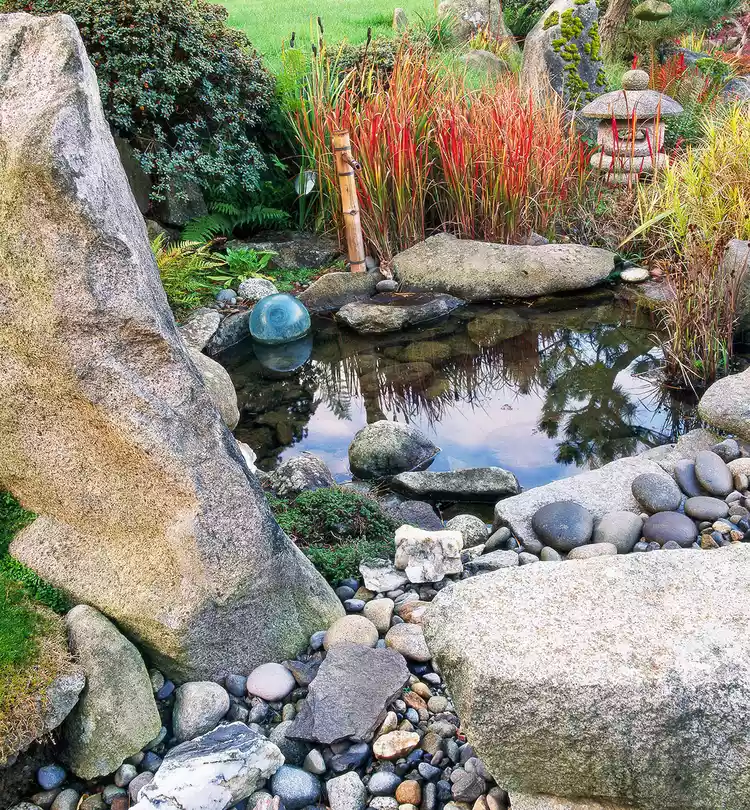
Create a Pond for Less
31. Create a pond for less. Ask a swimming pool maintenance service for leftover rubber liner before you buy one for your backyard pond. Depending on how much you need, a service might give it to you if you'll pick it up or sell it at cost, which can save you a considerable amount of money. And a septic tank bottom often costs less than a fiberglass pond. Because the structure is underground, the only difference you'll see is in the price tag.