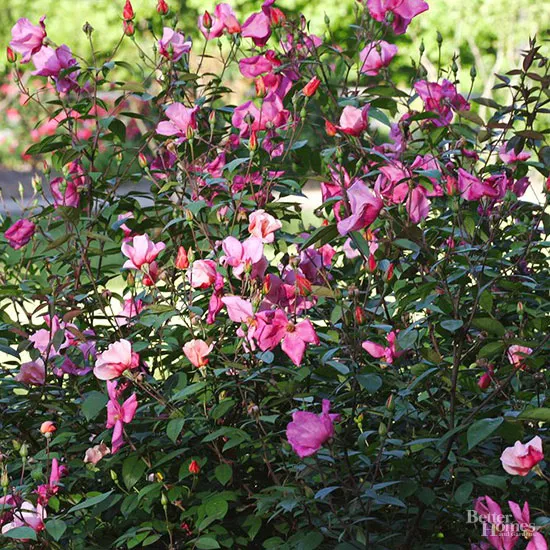
Butterfly rose (Rosa ‘Mutabilis’) is an old garden heirloom shrub that is a delightful addition to any landscape. Although your garden visitors may not believe you, this horticultural kaleidoscope is only one rosebush—even though it blooms in three colors and varying shades all at once. New foliage and bud sheaths are a coppery-bronze, and the established foliage is clean green and shiny to boot.
Here’s how the petal coloring works: At first, it is a vivid orange, and then the buds open to a honey yellow. Then, the next day after pollination, they become pale pink, deepening to nearly crimson the following day or two. This repeat flowering heirloom can be treated more like a decorative shrub than a traditional rosebush. The single flowers are less than 2 inches in size, but they appear in groups of four or five blooms that are slightly fragrant.
Butterfly Rose Overview
| Genus Name | Rosa 'Mutabilis', syn. Rosa chinensis 'Mutabilis' |
| Common Name | Butterfly Rose |
| Additional Common Names | China rose |
| Plant Type | Rose, Shrub |
| Light | Part Sun, Sun |
| Height | 3 to 8 feet |
| Width | 4 to 6 feet |
| Flower Color | Orange, Pink, Red, Yellow |
| Foliage Color | Blue/Green |
| Season Features | Spring Bloom, Summer Bloom |
| Special Features | Attracts Birds, Cut Flowers, Fragrance |
| Zones | 6, 7, 8, 9 |
| Propagation | Stem Cuttings |
Where to Plant Butterfly Rose
The butterfly rose is not the hardiest of roses and is almost exclusively a Southern or Western beauty. Grow it in USDA Zones 6-9 in well-draining soil.
This arching shrub is at its best in full sun when covering a wall or tall fence. Its splayed, wrinkled petals flit in a soft breeze. It is also eye-catching as an informal hedge or in a cottage garden. In ideal conditions, the mature shrub reaches 6–8 feet tall, but when grown in partial sun, it typically only grows to 3–4 feet.
How and When to Plant Butterfly Rose
Plant nursery containers of butterfly rose any time of year in areas where the shrub is hardy. Dig a hole twice as wide as the plant’s nursery container and the same depth. If the soil is poor or doesn’t drain well, amend it with compost or other organic matter. Wearing garden gloves to protect yourself from the shrub’s thorns, remove the plant from the container, and gently loosen the bottom roots. Position the shrub in the hole so it sits just above the soil line, and fill the hole halfway with the amended soil. Water the soil and then continue to fill the hole, pressing down with your hands to compact the soil around the roots.
When planting as a hedge, space these shrubs 8 feet apart.
Butterfly Rose Care Tips
The butterfly rose is a low-maintenance shrub when given the care it prefers.
Light
Butterfly roses grow best in full sun (at least six hours of bright sun a day) but tolerate some shade in the afternoon in hot areas, although the bloom quantity may be reduced with less sun.
Soil and Water
This shrub prefers moderately fertile, well-draining soil with a neutral pH, although it adapts to other conditions. After this shrub is established—which may take two to three years—it needs watering only every couple of weeks. Water at the base; watering from above encourages leaf diseases.
Temperature and Humidity
Butterfly rose is hardy in USDA Zones 6–9, which includes below-freezing temperatures in winter. In the coldest of these conditions, the shrub can benefit from a thick mulch layer. In most areas, the average humidity is acceptable for the shrub, although very humid locations can lead to increased disease conditions.
Fertilizer
Undemanding butterfly rose doesn’t require fertilizer, but if you want to fertilize your plant, use a low-nitrogen, slow-release granular fertilizer in spring, following the product instructions.
Pruning
Butterfly rose pruning is usually limited to the removal of dead inner wood or canes that aren’t producing. The plant can be pruned in late winter to control the shape or height of the plant.
Deadheading isn’t necessary to keep the shrub blooming, but it will encourage more prolific flowering. If deadheading doesn’t occur, orange hips eventually form.
Pests and Problems
When grown in full sun and with good air circulation, an established butterfly rose is disease-resistant to many of the garden pests that bother most rosebushes. It may occasionally exhibit black spot—especially in humid climates—which doesn’t substantially affect the shrub; remove the affected leaves.
How to Propagate Butterfly Rose
Butterfly rose can be propagated with stem cuttings. Take 6-inch softwood cuttings in spring when the shrub starts to bloom. Remove any foliage from the bottom half of the cutting, leaving the leaves at the top, and dip the end into rooting hormone. Insert it into a small pot filled with well-draining potting soil, water it, and put a clear plastic bag “tent” over the cutting. Place it in a warm area out of direct sunlight. After a few weeks, check the cutting to see if roots have started to form by gently tugging on the top of the cutting or by tipping the pot sideways and partially pulling the cutting out. If they have, remove the tent and move the cutting into an area of bright indirect light. If not, replace the tent and wait a few more weeks before testing again.
Butterfly Rose Companion Plants
The bottom part of butterfly rose shrubs can look a bit bare. The best companion plants are relatively short and distract from this bareness while adding additional color or texture to the garden.
Lady’s Mantle
Lady’s mantle features dainty yellow flowers that bloom in late spring to early summer in airy masses above the foliage. This plant grows 1–3 feet tall and enjoys the same growing requirements as butterfly rose shrubs.
Cranesbill Geranium
A classic garden plant, perennial geraniums, also known as cranesbill geraniums, have been a gardener’s favorite for over a century. The old-fashioned standard for beds, borders, and containers, geraniums are still among the most popular plants today. They grow 12 to 18 inches tall and enjoy the same growing requirements as butterfly rose shrubs. These perennials bloom from spring to midsummer; some varieties bloom into fall.
Lamb’s Ear
The leaves and stems of lamb’s ear are covered with a dense layer of tiny white hairs that make them feel silky to the touch and give them a silvery appearance. While lamb’s ear is most commonly grown for its foliage, it does bloom; some varieties are grown specifically for their prolific blooms. This plant grows to 2 feet tall.