How to Prune Thyme to Keep Your Herb More Productive

34.9K
2.4K
1.1K
2025-11-10
How to Prune Thyme to Keep Your Herb More Productive

If you have just one thyme plant in a container, you may be harvesting enough to encourage plenty of fresh new growth–use it in garlic-thyme sauce or thyme-roasted chicken. But knowing how to prune thyme can help when your plant starts getting leggy or straggly. Keeping culinary thyme, and even creeping thyme varieties used as groundcover, in a neater shape will result in more fresh, tender growth and fewer bare, woody stems.

Reasons for Pruning Thyme

Prune culinary thyme when you want the plant to produce more vegetative growth with a bushy habit. Occasional pruning will help keep it from getting woody and sparse at the base. Gardeners also prune thyme to remove flowers so the plant remains in the growth stage (rather than reproductive), and for taking cuttings to propagate more thyme.

Encourage a bushy shape.

Thyme plants, even upright varieties, tend to be a bit sprawling and can look loose and carefree. But, that informal look often comes with straggly branching. Trimming the runaway stems will cause them to be bushy and vigorous. Older plants tend to get sparse and shrub-like at the base (and unattractive). A refresh in spring will help stems tender and pliable instead of woody.

When a stem is trimmed, the plant responds by sending out more branches from the nearest node. Thyme is a semi-woody herb, and pruning has the same effect as it would on woody shrubs like yew (Taxus spp.) or boxwood (Buxus spp.)–it forces more branching and a compact habit with more foliage.

Prevent thyme from flowering.

Thyme flowers are edible, and pollinators love them, but many gardeners prefer to keep their thyme in vegetative mode so that the plants continue making more tasty leaves. Thyme doesn't acquire a bitter taste after flowering like some other herbs. However, it can taste slightly mild, with a less potent flavor and aroma. 

Once you've harvested all the thyme you'll want for the year, you may wish to let it flower and enjoy watching the bees go crazy for it. Thyme flowers are dainty and attractive, lending themselves well to homegrown bouquets of cut flowers.

Cuttings for thyme new plants.

Straight growing stems of this year's growth are excellent candidates for propagating with stem cuttings you can use to create more thyme plants. Here's how:

  1. Snip off a section containing a growing tip and about 4-6 inches of stem. Select a stem that is not flowering or hasn’t flowered yet.
  2. Do a final trim on the cutting just below a node, and gently strip the leaves off the bottom ⅔ of the stem. 
  3. Gently poke it into moist potting soil (add a big handful of perlite or use seed-starting mix to boost drainage), and keep it moist by covering or misting regularly. 
  4. Set them out of direct sunlight. In about 3-4 weeks, your thyme cuttings should be rooted. 

When to Prune Thyme Plants

Thyme can be pruned or cut back several times yearly for mass harvesting or to control flowering, shaping, and gathering stem cuttings. Autumn is a good time for a general haircut pruning. Lighter pruning can be done at any time.

If you are pruning a small plant or only a few stems, take the extra moment to do it via the method below. If you have many plants or a large plant, it's okay to grab a handful and cut all at once, even if it isn't exactly at a node.

Steps for Pruning Thyme

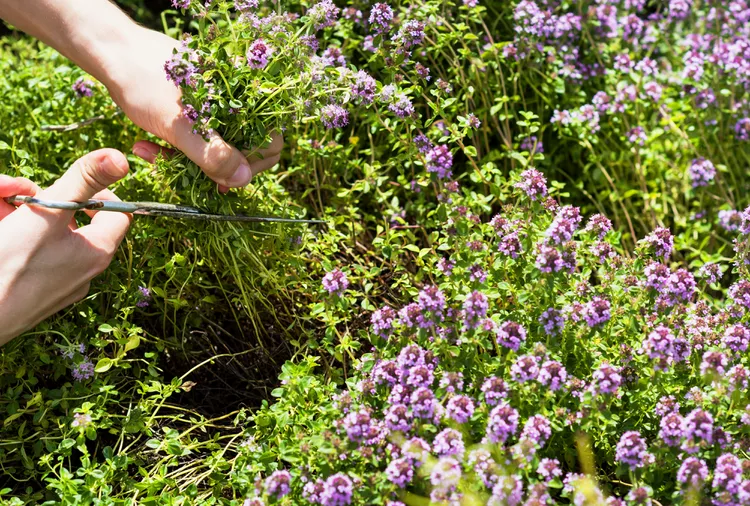
Pruning thyme plants is a snap; it might be the most pleasant-smelling task you've ever done.

  1. Grab a stem and look for a node where leaves attach to the stem. There's usually a node on culinary thyme about every inch or so.
  2. Use your fingernails, herb snips, or scissors to pinch or snip the stems just above the node.
  3. Repeat for any stems that are flowering or to force more growth. Avoid removing more than ⅓ of the stem at a time or ⅓ of the entire plant at the same pruning.

If you're going to propagate some of the pruned thyme stems, keep them from drying out by immediately placing them in a sealed plastic bag with a damp paper towel until you can get them back to the house and potted up. 

Care Tips for Thyme Plants

Pruning and frequent harvesting will keep your thyme in good shape, and providing it with the right amounts of water and light will help it produce the most flavorful leaves full of aromatic oils.

Watering

Once established, thyme is drought tolerant. In fact, this herb would rather grow on the dry side and suffers in consistently moist conditions. When growing in the ground, it seldom needs to be watered unless you are experiencing extremely dry weather.

Thyme grown in containers likely will need supplemental watering in between rain showers. Let the soil dry out a bit first. Test by sticking your finger in the potting soil and feeling for moisture. Wait to water until it feels dry up to the middle knuckle. Watering thoroughly but infrequently is better than many constant shallow waterings to encourage deeper roots.

Light

Thyme grows best in full sun. It loves dry, warm, sunny weather (like the Mediterranean) and will grow slowly and have less flavor in lower light. Thyme can be grown quite successfully indoors, but you'll need to provide a super-sunny window or bright artificial light to make it happy.

Related Article

How to Prune 12 Common Types of Evergreen Shrubs and Trees
24.3K
1.9K
388

How to Prune 12 Common Types of Evergreen Shrubs and Trees

Use these tips on pruning evergreens like boxwood, yews, and junipers so they don't become overgrown messes.
Expert Tips for Growing and Designing With Beautiful Boxwood
11K
219
72

Expert Tips for Growing and Designing With Beautiful Boxwood

With our boxwood garden ideas, you'll create durable changes to your landscaping. Boxwoods, a type of evergreen, are an elegant addition to a formal garden. Learn how to care for boxwood, so that your boxwood garden thrives.
How to Plant and Grow Eucalyptus
5.9K
410
168

How to Plant and Grow Eucalyptus

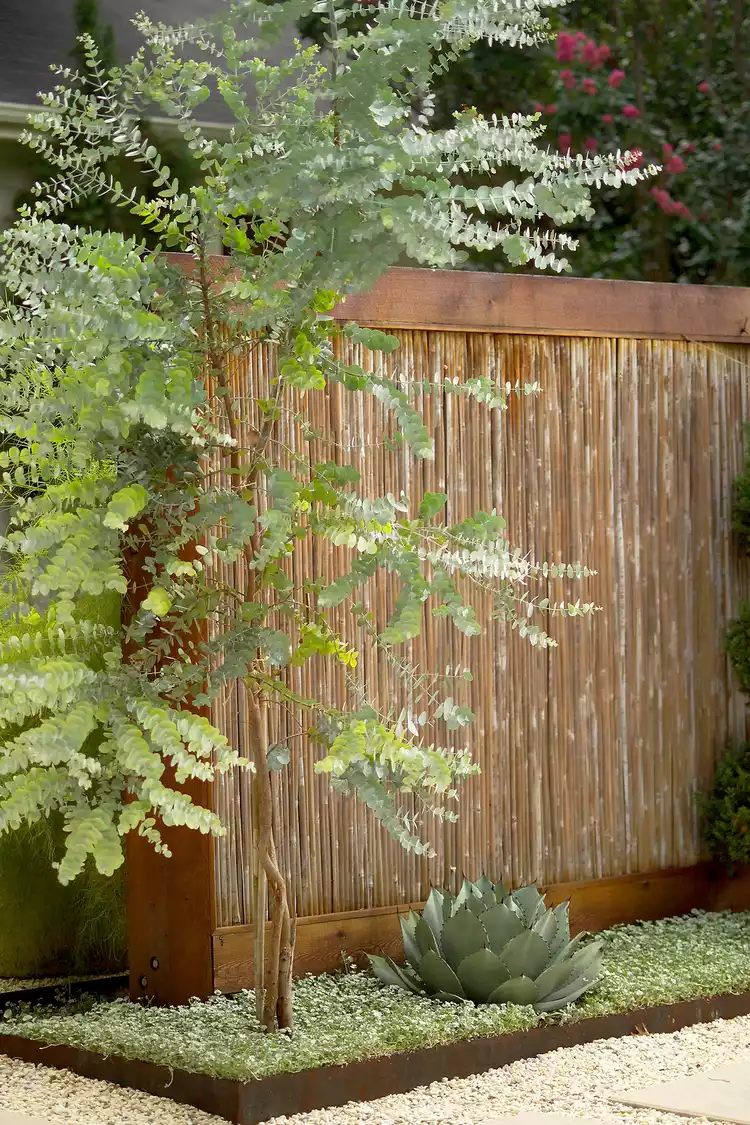
Learn to grow eucalyptus with our complete guide. Eucalyptus varieties are known for their potent essential oils and heady fragrance.
6 Surprising Benefits of Planting Trees
10.9K
218
80

6 Surprising Benefits of Planting Trees

Learn how planting trees can transform your environment and improve your quality of life.
This Bold Woodland Garden Plan Brims with Color and Texture
30.1K
301
75

This Bold Woodland Garden Plan Brims with Color and Texture

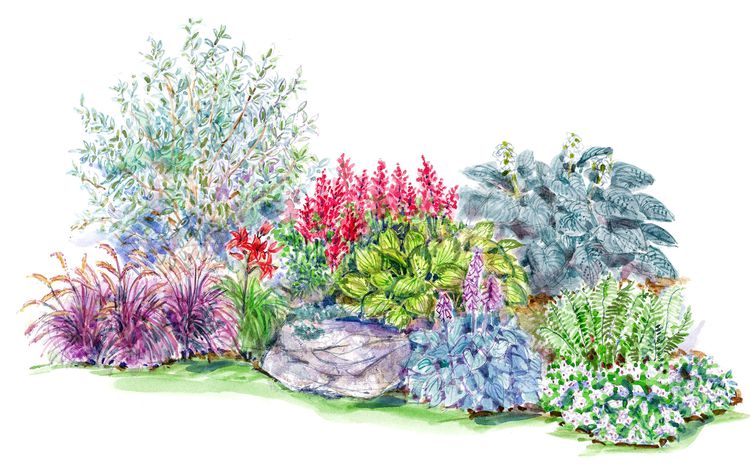
Filled with easy-care plants, this bold woodland garden plan design is perfect for livening up a spot under a tree's canopy.
This No-Fuss Shade Garden Plan Is Your Fix for Bare Spots Under Trees
25.4K
507
187

This No-Fuss Shade Garden Plan Is Your Fix for Bare Spots Under Trees

Featuring a mix of easy-care plants, this no-fuss shade garden plan is the perfect way to add color to a shaded spot in your yard.
This Cozy Corner Garden Plan Will Brighten Up an Unused Spot in Your Yard
35.3K
1.8K
212

This Cozy Corner Garden Plan Will Brighten Up an Unused Spot in Your Yard

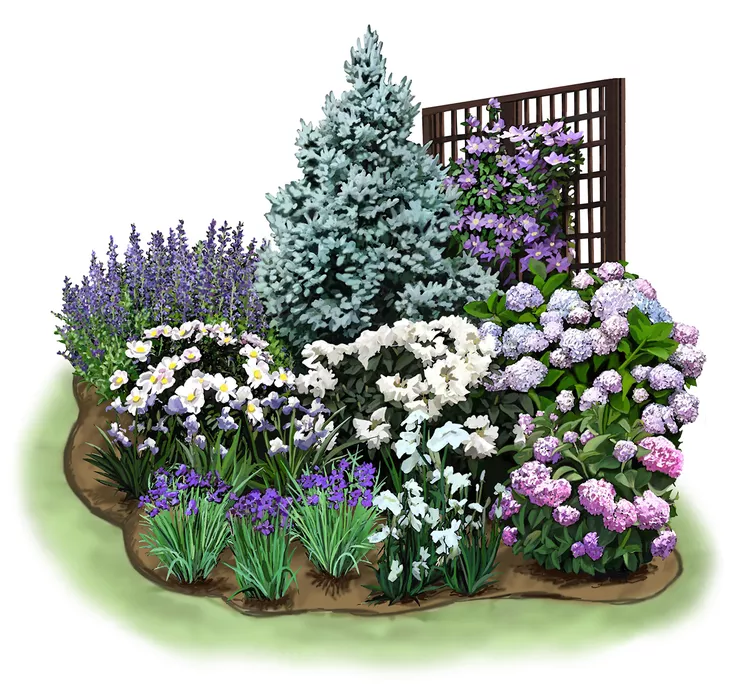
This cozy corner garden plan will create a pocket of color in the unused spots in your yard.
How to Plant and Grow Pineapple Sage
42K
2.9K
853

How to Plant and Grow Pineapple Sage

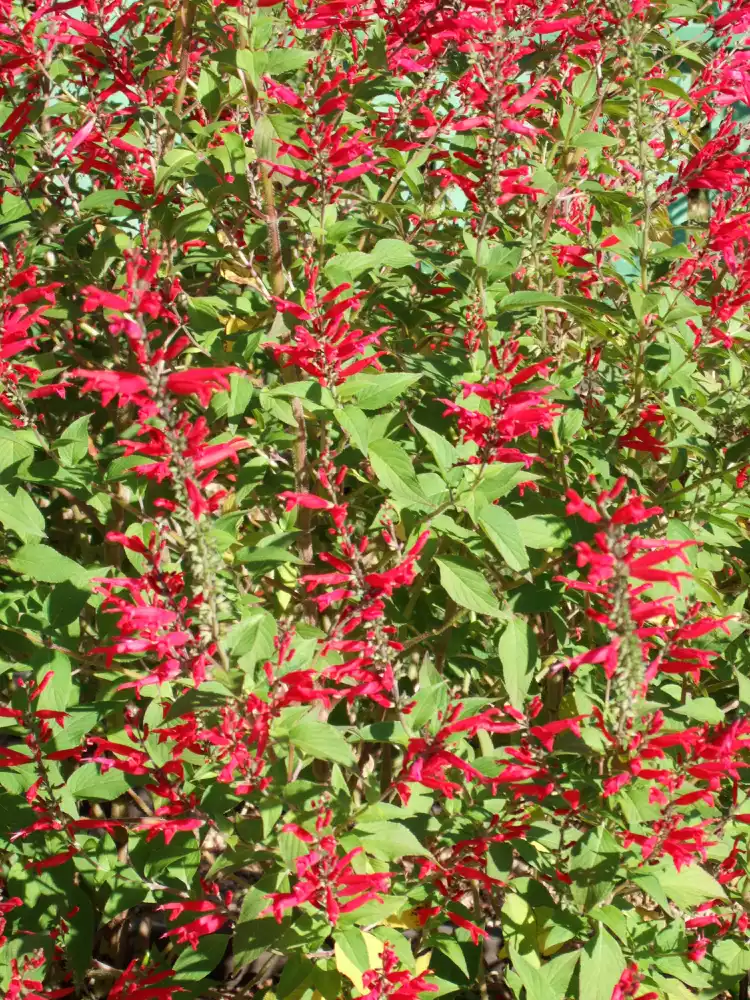
Read this guide to learn how to plant and grow pineapple sage in herb gardens or pollinator habitats!
Got Yellow Leaves on Tomato Plants? 9 Reasons Why and How to Fix It
1.2K
106
24

Got Yellow Leaves on Tomato Plants? 9 Reasons Why and How to Fix It

If you see yellow leaves on tomato plants, here's how to diagnose and fix the problem.
10 Best Companion Plants for Zucchini
8.7K
521
224

10 Best Companion Plants for Zucchini

Keep your zucchini plants healthy and naturally pest-free with these top companion plants that include veggies, flowers, and herbs.
How to Create Beautiful Tropical Planters and Container Gardens
39.4K
788
275

How to Create Beautiful Tropical Planters and Container Gardens

Bring the bold, graphic foliage of plants from the tropics to your home with one of our nine favorite tropical container combinations.
How to Grow and Care for Cordyline Plants in Your Garden or Home
27.5K
1.4K
247

How to Grow and Care for Cordyline Plants in Your Garden or Home

Learn how to plant and care for cordyline to add a tropical feel to your garden or home, including watering, light, and soil requirements.
How to Plant and Care for a String of Pearls Plant
38.3K
3.4K
379

How to Plant and Care for a String of Pearls Plant

Find out how to propagate, water, and take care of a string of pearls plant.
10 Smart Money-Saving Strategies When Shopping for Plants
2.7K
215
98

10 Smart Money-Saving Strategies When Shopping for Plants

From purchasing seeds instead of full grown plants to shopping seasonally and at local sales, here are some of the best ways to reduce costs when buying plants. Purchasing plants from local farms and looking for plants that can be divided are some of the other ways experts suggest reducing your plant spending.
18 Essential Elements of Authentic Japanese Garden Design
44.1K
3.5K
1.4K

18 Essential Elements of Authentic Japanese Garden Design

These Japanese garden designs are relaxing and serene. Try our Japanese garden ideas for a peaceful ambiance in your backyard.
How to Make a DIY Hummingbird Feeder with a Mason Jar
16.9K
1.5K
364

How to Make a DIY Hummingbird Feeder with a Mason Jar

Attract hummingbirds with this easy mason jar hummingbird feeder project that comes together in just a few steps.
The 10 Best Low-Maintenance Perennials for Southern Gardens
8.7K
693
339

The 10 Best Low-Maintenance Perennials for Southern Gardens

The best perennials for southern gardens are low-maintenance and a cinch to grow.
How to Make Easy Concrete Planters for Your Garden
33.1K
3K
297

How to Make Easy Concrete Planters for Your Garden

DIY concrete planters are simple to make with this step-by-step guide. Plus get design ideas and tips for using your new planters.
25 Outdoor Succulent Container Ideas that Resist Heat and Drought
16.3K
1.3K
611

25 Outdoor Succulent Container Ideas that Resist Heat and Drought

These outdoor succulent container ideas feature not only dramatic arrangements, but resistance to heat and drought.
How to Make an Adorable Broken Pot Fairy Garden in 4 Easy Steps
32.1K
2.6K
974

How to Make an Adorable Broken Pot Fairy Garden in 4 Easy Steps

A broken pot fairy garden is a great solution for using up damaged garden pots. Make use of a cracked terra-cotta pot by transforming it into a sweet fairy garden container overflowing with moss and a variety of succulents.