How to Harvest Cilantro Leaves and Coriander Seeds

28.6K
856
428
2025-11-11
How to Harvest Cilantro Leaves and Coriander Seeds

Cilantro is a fast-growing, annual herb that’s mostly grown for its fresh leaves, which can be mixed into salsa, salads, and lime rice. But once you learn how to harvest cilantro leaves, you may want to let your herbs grow a little longer and also harvest cilantro seeds, otherwise known as coriander. Whether you’re growing herbs for leaves or seeds, you’ll find all the cilantro harvesting tips you need below.

When to Harvest Cilantro

Cilantro is a cold hardy herb that’s typically planted in early spring herb gardens and harvested before summer hits. But cilantro can also be succession planted every few weeks through early summer, and again in late summer for an autumn harvest.

When plants are grown from seed, cilantro leaves should be ready to harvest about 50 to 60 days after planting. Coriander seeds, on the other hand, take longer to mature and are typically ready to pick about 120 days after planting. That said, some varieties of cilantro mature faster than others and fast growing cilantro may be ready to harvest in just a month.

To get the best tasting cilantro leaves, harvest cilantro in the morning before the plant starts to flower. Cilantro plants are ready to harvest when they’re at least 4 weeks old, over 6 inches tall, and have plenty of healthy stems and leaves.

Most gardeners use cilantro as a cut-and-come-again herb in their culinary gardens and harvest stems and leaves as needed for recipes. But cilantro plants will bolt in hot weather, so it’s best to harvest the entire plant before summer unless you want to gather coriander seeds. You’ll know cilantro is about to bolt when the plant starts growing elongated stems and small leaves that look a bit like carrot greens.

How to Harvest Cilantro Without Killing the Plant

Cilantro can be harvested little by little for cooking, or it can be harvested in a larger quantity for freezing or drying. Generally speaking, it’s best to harvest only as much cilantro as you can use right away since fresh cilantro doesn’t last long in the fridge. However, plants should be harvested in their entirely before they bolt or are damaged by fall frosts.

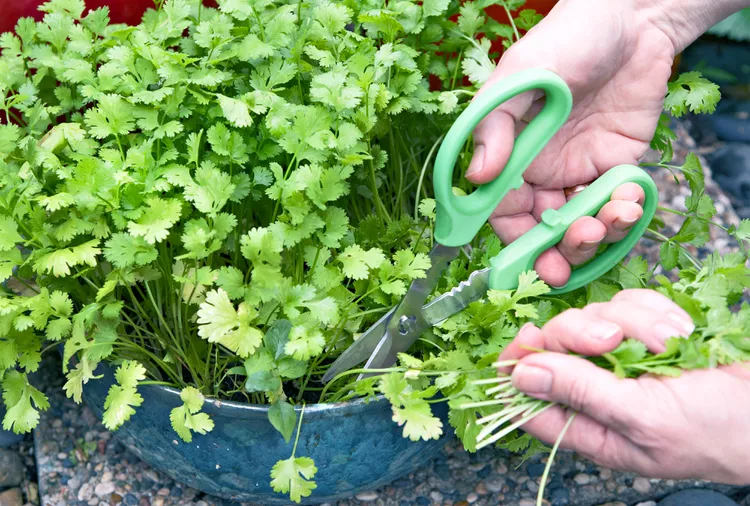
To harvest a small quantity of cilantro for cooking, use your fingers or sharp scissors to clip off the stems you need about 1 inch above the soil line. To keep these edible plants productive, harvest the older, outer leaves of the plant first and leave the center of the plant untouched. Small harvests of cilantro can be taken every few days without compromising the health of the plants.

To harvest a larger quantity of cilantro, gather a handful of stems in one hand and use scissors to clip them off 1 inch above the soil line. Even though cilantro is a fast-growing herb, it can be vulnerable to overharvesting, so only harvest about a third of your plant at one time and wait at least 2 weeks before taking another large harvest. If you use a lot of cilantro in your cooking, consider growing additional cilantro plants and take smaller harvests from each plant to avoid overharvesting.

Harvesting cilantro regularly can delay bolting and prolong your harvest of fresh cilantro leaves; however, these edible plants will eventually bolt and go to seed in hot weather. But bolting can be a good thing if you want to harvest coriander seeds.

Harvesting Cilantro Seeds

Cilantro seeds, or coriander, develop after the plants bolt and the flowers start to fade. At first, coriander seeds will look like tiny, green balls, but they turn brown as they ripen. Allow the coriander seeds to dry on the plant and then harvest them by clipping off the flower heads when the seeds turn a light brown color.

Loosely place the cilantro seed heads in a perforated paper bag and allow them to continue to dry indoors in a dry, dark place with good air flow. Once the seeds are completely dry, shake them free from the flower head and store them in airtight containers in your pantry.

How to Store Cilantro

Once you learn how to harvest cilantro from your garden, you need to make sure you're storing it properly so it's safe to eat. Because fresh cilantro wilts quickly, it’s best to eat cilantro as soon as possible after harvesting. However, if you harvest more than you can use right away, store cilantro in the fridge for about 3 to 7 days.

The easiest way to store cilantro is to place cut stems in a glass of water and cover the top of the glass and cilantro leaves with a zipper storage bag to lock in humidity. Store the glass in the fridge and replace the water daily to keep everything fresh. Alternatively, cilantro leaves can be wrapped in a damp paper towel and stowed inside a plastic bag in the crisper drawer.

If you want to store cilantro leaves even longer, fresh cilantro can be dehydrated with a food dehydrator and stored in airtight containers in the pantry, just like dried coriander seeds. Cilantro can also be flash frozen and stored in airtight baggies in the freezer or it can be chopped and frozen in ice cube trays filled with oil or water.

Frequently Asked Questions

  • Should I let my cilantro flower?

    That depends. Cilantro leaves won’t taste as good after the plant bolts, but cilantro flowers are necessary if you want to harvest coriander seeds. Edible cilantro flowers also make delightful salad toppers and they attract beneficial insects for natural pest control.

  • Why is cilantro so hard to grow?

    Cilantro can be tricky to grow because it does not handle heat well. While bolting will inevitably occur, you can slow down this process by growing cilantro in partial afternoon shade, watering plants regularly, growing ‘Slow-Bolt’ cilantro varieties, and pinching back cilantro flower buds as soon as they appear.

  • How do you use a lot of fresh cilantro?

    Fresh cilantro can be preserved with dehydrating or freezing, but there are many tasty recipes that call for fresh cilantro too. If you need to use up a lot of cilantro fast, consider adding cilantro to canned salsa recipes, blend it into cilantro pesto, or use it as the base for cilantro chimichurri.

Related Article

How to Prune 12 Common Types of Evergreen Shrubs and Trees
24.3K
1.9K
388

How to Prune 12 Common Types of Evergreen Shrubs and Trees

Use these tips on pruning evergreens like boxwood, yews, and junipers so they don't become overgrown messes.
Expert Tips for Growing and Designing With Beautiful Boxwood
11K
219
72

Expert Tips for Growing and Designing With Beautiful Boxwood

With our boxwood garden ideas, you'll create durable changes to your landscaping. Boxwoods, a type of evergreen, are an elegant addition to a formal garden. Learn how to care for boxwood, so that your boxwood garden thrives.
How to Plant and Grow Eucalyptus
5.9K
410
168

How to Plant and Grow Eucalyptus

Learn to grow eucalyptus with our complete guide. Eucalyptus varieties are known for their potent essential oils and heady fragrance.
6 Surprising Benefits of Planting Trees
10.9K
218
80

6 Surprising Benefits of Planting Trees

Learn how planting trees can transform your environment and improve your quality of life.
This Bold Woodland Garden Plan Brims with Color and Texture
30.1K
301
75

This Bold Woodland Garden Plan Brims with Color and Texture

Filled with easy-care plants, this bold woodland garden plan design is perfect for livening up a spot under a tree's canopy.
This No-Fuss Shade Garden Plan Is Your Fix for Bare Spots Under Trees
25.4K
507
187

This No-Fuss Shade Garden Plan Is Your Fix for Bare Spots Under Trees

Featuring a mix of easy-care plants, this no-fuss shade garden plan is the perfect way to add color to a shaded spot in your yard.
This Cozy Corner Garden Plan Will Brighten Up an Unused Spot in Your Yard
35.3K
1.8K
212

This Cozy Corner Garden Plan Will Brighten Up an Unused Spot in Your Yard

This cozy corner garden plan will create a pocket of color in the unused spots in your yard.
How to Plant and Grow Pineapple Sage
42K
2.9K
853

How to Plant and Grow Pineapple Sage

Read this guide to learn how to plant and grow pineapple sage in herb gardens or pollinator habitats!
Got Yellow Leaves on Tomato Plants? 9 Reasons Why and How to Fix It
1.2K
106
24

Got Yellow Leaves on Tomato Plants? 9 Reasons Why and How to Fix It

If you see yellow leaves on tomato plants, here's how to diagnose and fix the problem.
10 Best Companion Plants for Zucchini
8.7K
521
224

10 Best Companion Plants for Zucchini

Keep your zucchini plants healthy and naturally pest-free with these top companion plants that include veggies, flowers, and herbs.
How to Create Beautiful Tropical Planters and Container Gardens
39.4K
788
275

How to Create Beautiful Tropical Planters and Container Gardens

Bring the bold, graphic foliage of plants from the tropics to your home with one of our nine favorite tropical container combinations.
How to Grow and Care for Cordyline Plants in Your Garden or Home
27.5K
1.4K
247

How to Grow and Care for Cordyline Plants in Your Garden or Home

Learn how to plant and care for cordyline to add a tropical feel to your garden or home, including watering, light, and soil requirements.
How to Plant and Care for a String of Pearls Plant
38.3K
3.4K
379

How to Plant and Care for a String of Pearls Plant

Find out how to propagate, water, and take care of a string of pearls plant.
10 Smart Money-Saving Strategies When Shopping for Plants
2.7K
215
98

10 Smart Money-Saving Strategies When Shopping for Plants

From purchasing seeds instead of full grown plants to shopping seasonally and at local sales, here are some of the best ways to reduce costs when buying plants. Purchasing plants from local farms and looking for plants that can be divided are some of the other ways experts suggest reducing your plant spending.
18 Essential Elements of Authentic Japanese Garden Design
44.1K
3.5K
1.4K

18 Essential Elements of Authentic Japanese Garden Design

These Japanese garden designs are relaxing and serene. Try our Japanese garden ideas for a peaceful ambiance in your backyard.
How to Make a DIY Hummingbird Feeder with a Mason Jar
16.9K
1.5K
364

How to Make a DIY Hummingbird Feeder with a Mason Jar

Attract hummingbirds with this easy mason jar hummingbird feeder project that comes together in just a few steps.
The 10 Best Low-Maintenance Perennials for Southern Gardens
8.7K
693
339

The 10 Best Low-Maintenance Perennials for Southern Gardens

The best perennials for southern gardens are low-maintenance and a cinch to grow.
How to Make Easy Concrete Planters for Your Garden
33.1K
3K
297

How to Make Easy Concrete Planters for Your Garden

DIY concrete planters are simple to make with this step-by-step guide. Plus get design ideas and tips for using your new planters.
25 Outdoor Succulent Container Ideas that Resist Heat and Drought
16.3K
1.3K
611

25 Outdoor Succulent Container Ideas that Resist Heat and Drought

These outdoor succulent container ideas feature not only dramatic arrangements, but resistance to heat and drought.
How to Make an Adorable Broken Pot Fairy Garden in 4 Easy Steps
32.1K
2.6K
974

How to Make an Adorable Broken Pot Fairy Garden in 4 Easy Steps

A broken pot fairy garden is a great solution for using up damaged garden pots. Make use of a cracked terra-cotta pot by transforming it into a sweet fairy garden container overflowing with moss and a variety of succulents.