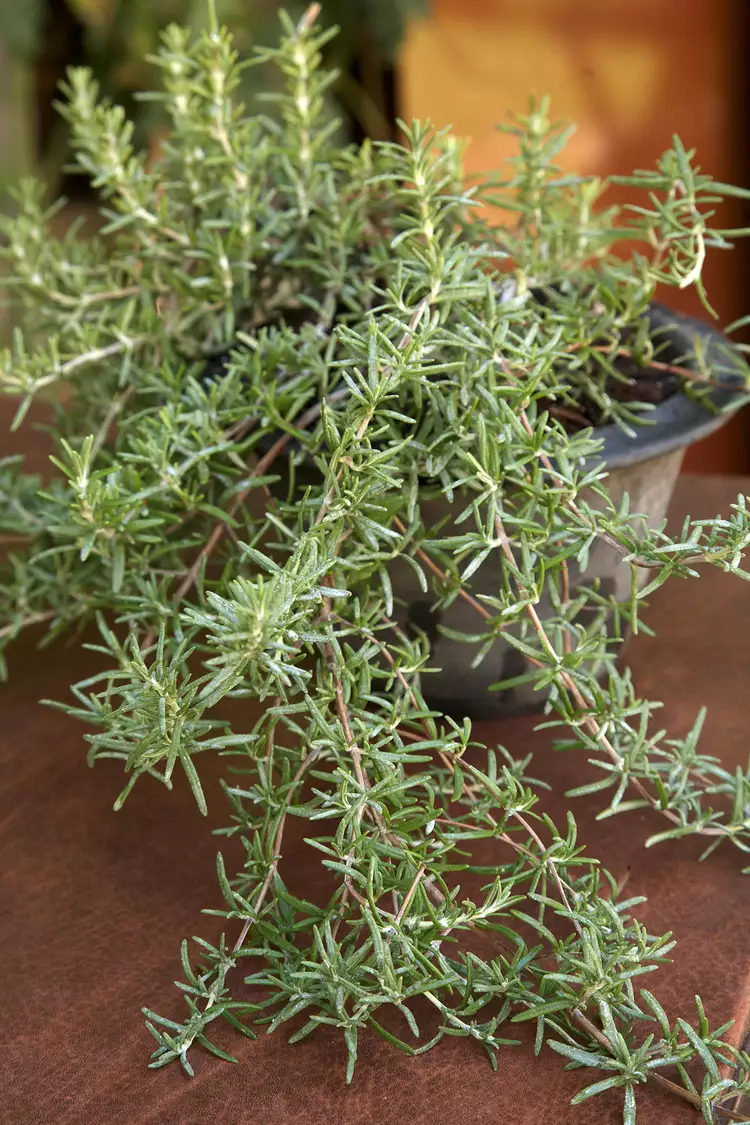
Livening up your meat and vegetable dishes with the fresh leaves of rosemary is easy when you grow your own rosemary plants. Whether your herb garden is just outside your kitchen door or on your kitchen windowsill, you can't beat the convenience of having rosemary available whenever you want it. Even if you live in an area with freezing winter temperatures, it's still possible to grow rosemary all year long by growing the herb outdoors in containers and then overwintering the plant indoors when the weather turns colder. If you don't have an existing garden, you can start your indoor herb garden with rosemary transplants from your local garden center. Whichever planting route you choose, follow these 11 tips for successfully growing rosemary indoors.
1. Repot Your Rosemary
Rosemary seeds are difficult to germinate, so the easiest way to start growing rosemary indoors is to buy young potted plants. Rosemary plants are often available year round, and some varieties such as compact 'Blue Boy' are ideal for growing indoors. Once you get your new rosemary plants home, repot them into a container that's one or two sizes larger than the original container. Keep in mind that a plant in a porous clay pot needs water more often than one in a plastic or ceramic pot.
You also can bring herbs indoors that have been growing outside all summer and repot them to extend the growing season indoors. Be sure to relocate your rosemary indoors before the temperature drops below 40℉ to protect it from cold damage.
If you don't want to move an entire rosemary plant indoors, you can take a few cuttings instead. Simply cut a 4-inch section (measured from the tip of the stem) and strip off all the leaves on the bottom inch of stem. Then plant the stem into damp potting mix.
2. Use Containers That Have Good Drainage
Make sure the container you choose for your rosemary plant has holes in the bottom to allow water to drain out. If there is extra water in the saucers under your pots, remove it after about an hour to prevent root rot and excessive sogginess in the soil. Most herbs thrive when they're planted in pots that are at least 12 inches across that allow room for root growth.
3. Pay Attention to Potting Mix
Use a commercial potting mix that's designed for edible plants—one that allows for good drainage and contains only a small amount of fertilizer, if any. You can also mix your own potting soil from equal parts bagged and sterile compost, perlite, and coarse sand. The mix needs to offer both air space and enough water retention to keep roots healthy. And starting with fresh, sterile mix will help prevent diseases, pests, and weeds from popping up.
4. Water Rosemary When Soil Feels Dry
In the summer, water rosemary when the top of the soil feels dry. Make sure the plant is not sitting in soggy soil because overwatering can cause rotting and insect issues. In the winter, keep your indoor rosemary plants just moist. Let the soil dry slightly between waterings.
5. Provide Plenty of Light
When growing rosemary, it's important that the woody-stemmed herb is placed in a warm location in summer and in a slightly cooler but bright location in winter. A kitchen windowsill with a southern exposure is usually a good spot for growing rosemary indoors because it's in convenient reach while cooking and it's likely to have enough light and air circulation. Rotate the plant on a weekly basis so that all sides of the plant receive six to eight hours of direct sunlight. If there's not enough sunlight inside your home, place your rosemary plant under grow lights for 12 to14 hours each day.
6. Regulate Temperature Inside Your Home
For the best indoor growing conditions, keep your indoor temperatures between 60℉ degrees to 70℉ during the day and at least 10 degrees cooler at night.
7. Raise Humidity Levels
The air in your home is usually much drier than in most outdoor environments. If you see spider mites on plants indoors, more than likely your humidity is too low. Grouping herbs together with other indoor plants can help to raise humidity levels, or place a humidifier nearby.
8. Increase Air Circulation
If you see fungal diseases on your plant such as powdery mildew, that's a sign that humidity is too high. Help prevent diseases and pest problems by using a small fan to keep moist air moving gently around the plants.
9. Provide Nutrients
When a potted herb is watered, nutrients and excess water leak out of its pot's drain holes, so it's important to provide nutrients to your rosemary plant with a slow-release fertilizer mixed into the potting mix at planting time. Four to six weeks after planting, fertilize your plants again with a slow-release fertilizer mixed into the top two inches of soil or use an organic product, such as fish emulsion, greensand, or kelp meal.
10. Prune Carefully
Use a clean, sharp pair of garden scissors or pruners to shape and stimulate your rosemary plant to produce fresh new growth. The best time to prune rosemary for these reasons is in the spring. Aim to cut stems back by a third of their length to keep your plant bushy and well-shaped. Make your cuts just above a set of leaves on the stem, which is where the new growth will happen. Cut off dead stems anytime it's needed.
11. Harvest Only the Top Two Inches of Each Mature Stem
When harvesting rosemary to use for cooking from time to time, it's best to focus on the most tender, flavorful leaves at the top two inches of each stem. The easiest way to harvest rosemary is to snip off the leaves into small pieces while holding the stem in your hand. Try to leave at least 6 inches of each stem behind so you don't deplete the plant's resources too much.